Industries · E-commerce
Ecommerce website development for a working sales process
Build a store around the products you sell and the orders your team fulfils. We plan the catalogue, checkout, content editing and required integrations together.


What goes wrong
Missing specifications and confusing options prevent customers from selecting the right item.
Routine collections and content updates require avoidable developer intervention.
Payment, stock or delivery rules behave differently from the operation behind the store.
A typical system
A typical system for an online store
See how your website, enquiries and customer records can work together. Open a step to explore the service behind it.
- 01Storefront and checkout
Catalogue, product options and a tested buying journey on Shopify or WooCommerce.
solution page → - 02Editable campaign pages
Reusable layouts the team can use for approved collections and promotions.
solution page → - 03Order administration
Scoped routing, status communication and assistance based on the actual sales process.
solution page → - 04Product data connections
A defined import and update model for a supported spreadsheet, stock system or ERP.
solution page →
Who exactly
Who we work with in e-commerce
A manageable first catalogue and a clear path from selection to fulfilment.
Information and visuals that help customers distinguish the range.
Retail and wholesale journeys separated where their ordering rules differ.
Begin with the catalogue and the order you must fulfil
An online store project starts with what customers buy and what the business must do after payment. A small catalogue with delivery appointments can be more demanding than a large catalogue of simple products. We examine representative items, variants, fulfilment rules and existing systems before choosing the platform or drawing the checkout.
Products customers understand
A product page needs an understandable name, relevant images, price, options and the information required to choose confidently. Dimensions, ingredients, compatibility or care instructions matter differently in different categories. We organise the page around the actual questions received by your team. Copying the same sales paragraph across products does not help a buyer distinguish them.
Orders staff can process
The order needs an owner, a stock rule, a payment status and a fulfilment route. Determine whether the customer is buying a physical product, booking a delivery slot, ordering a customised item or requesting a wholesale quotation. Those differences affect the data model and confirmation messages. A visually complete storefront can still fail if these operational decisions are left until launch week.
Choose Shopify, WooCommerce or custom development by constraints
We compare the systems against the required purchase journey, editing workflow and maintenance budget. Existing staff knowledge, integrations and account ownership matter alongside design freedom. AI can help with implementation or approved drafts, but it does not remove the need to test payments, stock and customer data. There is no automatic search advantage attached to the way the code was produced.
Managed commerce platform
Shopify can suit a team that wants a managed commerce environment with a consistent administration interface. The scope must still account for theme work, provider availability, app fees and restrictions on particular customisations. A design proposal should distinguish features supplied by Shopify from those supplied by an external app or separately built integration.
Flexible implementation
WooCommerce offers control within a WordPress installation, with hosting, updates and extension compatibility to manage. Custom development may be justified for a distinct purchasing or account workflow. In either case, establish who maintains the result and what can be changed through an editor. Rebuilding a familiar cart from scratch needs a concrete business reason, not just a preference for a technology.
Prepare products so they remain manageable
Model the options
List the attributes that genuinely distinguish products and the options that create a sellable variant. In WooCommerce, variations can carry their own price and stock settings. That capability still needs a consistent product model. Decide whether colour, size, weight or package quantity changes the item, and avoid constructing combinations that the business cannot actually supply.
Clean the source
Use a sample import before moving the whole catalogue. Check identifiers, descriptions, image rights, missing options and units. A supplier spreadsheet may contain internal terminology that customers do not understand. Keep the stable identifiers required by stock or accounting systems while preparing public names and descriptions separately. Record how future supplier updates will affect edited content.
Test the editor
Give the store team realistic publishing tasks: add a product, change availability, prepare a collection and preview a promotion. Reusable page blocks should support these tasks without allowing every campaign to break the layout. Identify any fields that only an integration should change. A handover that merely lists passwords does not establish that the team can operate the store.
Test the exceptions that interrupt a sale
- Payment states
- A paid order, pending payment and failed payment require different states. Test the supported provider’s sandbox or agreed test process, including cancellation and retry. Confirm that a repeated callback does not create a second order or duplicate fulfilment. The success page should reflect the actual payment result rather than assuming that returning from a payment page means the money was received.
- Delivery rules
- Delivery depends on the customer’s destination, the items in the basket and the business’s fulfilment locations. Define collection, local delivery and shipping separately when relevant. Test a mixed basket and an unsupported address. Do not promise a carrier or payment method merely because a plugin exists; account eligibility, country coverage and configuration must be checked for the actual merchant.
- Customer communication
- The buyer needs an order reference, a reliable contact route and understandable status messages. Staff need the item options and fulfilment instructions in the system they use. Establish how cancellations, partial fulfilment and refunds are handled. We implement the agreed process and test its messages; commercial policies and their legal approval remain the merchant’s responsibility.
Move useful content and addresses with the products
For an existing store, inventory products, categories, editorial pages and important incoming links. Keep useful URLs where possible and map changed addresses to relevant replacements. Separate customer and order data from public catalogue data; the move may require different tools and permissions. An exported product file alone is not proof that the trading operation has been backed up.
Plan the final stock and order synchronisation around a defined cutover. Decide which system accepts orders during the move and who reconciles activity close to launch. Customer login behaviour, gift cards and subscriptions need explicit investigation when present. Do not assume those features transfer with product descriptions. A small trial migration reveals these dependencies earlier than a full launch attempt.
A redesign should preserve customer continuity
Search work includes crawlable category and product pages, useful internal links and consistent metadata. It also requires actual product information. Neither a high word count nor a new frontend guarantees rankings. Evaluate the store through customer tasks and relevant search visibility over time, while preserving the useful material and addresses the existing business has already established.
Agree the deliverables and the first review
Purchase and support
Acceptance includes finding a product, selecting a valid option, paying, receiving a confirmation and handling a subsequent support question. Repeat the journey on a phone and with an unavailable variant. Check totals and selected delivery methods against the agreed configuration. A home-page review cannot substitute for these checks, because most commercial errors occur after the customer chooses an item.
Technical ownership
The proposal separates design and development, catalogue preparation, integrations and recurring provider costs. The handover identifies domain, platform and payment account owners, staff access and maintenance responsibility. Shopify apps or WordPress extensions need a documented purpose. Remove unused components instead of passing a collection of unexplained subscriptions to the team.
Evidence of performance
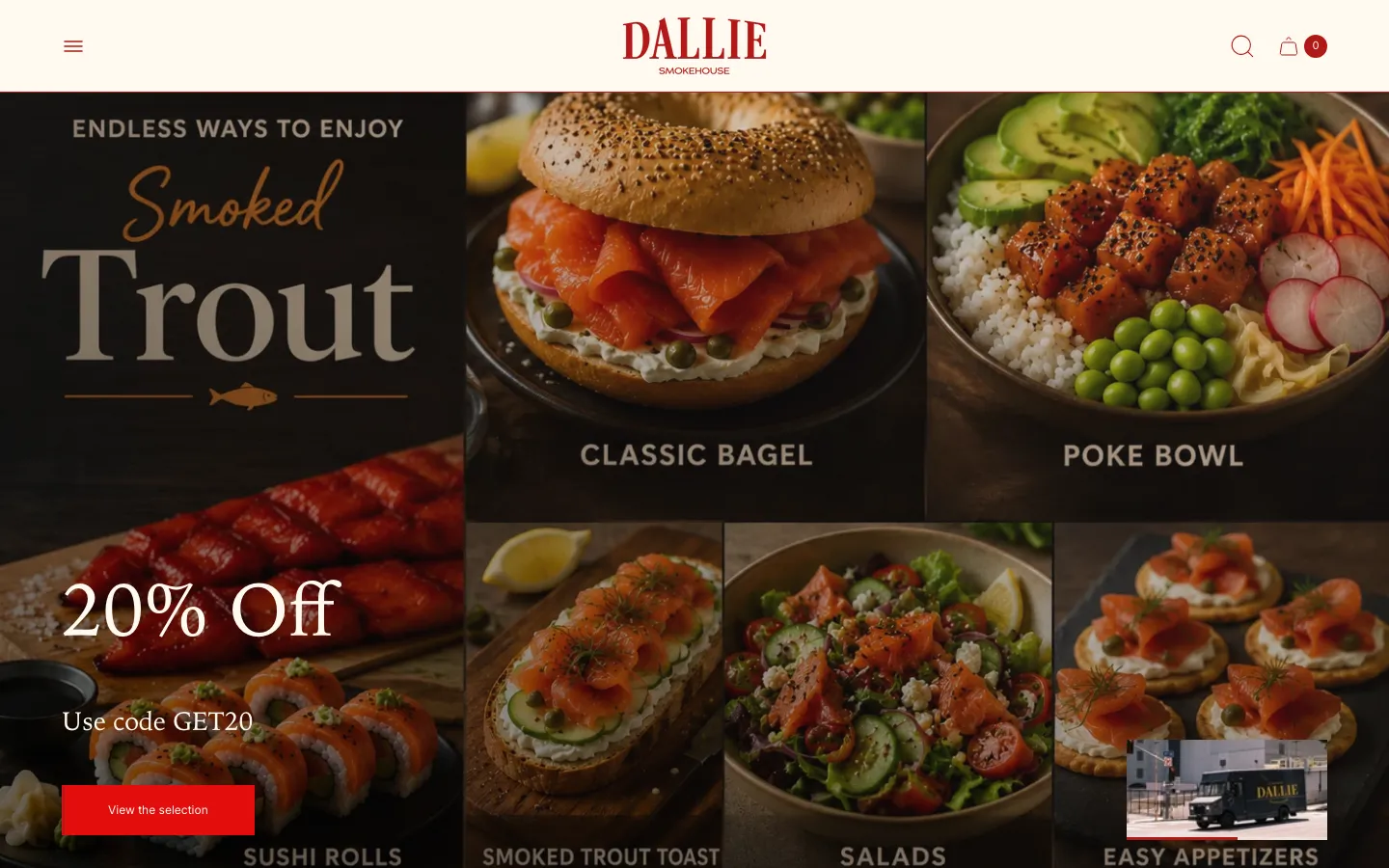
Review completed purchases and suitable wholesale enquiries, with the distinction between revenue and profit kept clear. Use analytics to identify points worth investigating, not to invent a sales uplift. Published stores including Rozmarin, The Beast Beauty and Dallie Smokehouse show different product and design contexts. Send your catalogue sample, current store and fulfilment process so we can prepare a proposal grounded in your own operation.
“They built our flower shop online: the catalogue, the languages, the ordering. Everything was explained in plain words, and when we needed changes after launch they responded. Now our customers order flowers from the site, not only by phone.”
Specifics
What is different in e-commerce
Methods are checked against the merchant account, provider and markets served.
Options have consistent identifiers and an agreed source of availability.
The merchant supplies approved terms and policies; the implementation presents them at the agreed stages.
Price
A store starts from €2 000; a catalogue fed from your system from €3 000; a process that answers and follows up from €500.
Fixed in writing after a short call. Project scope and running costs are agreed before work begins.
Questions
Questions about e-commerce projects
Which platform should we choose?
We compare the required workflow, integrations, editing and maintenance rather than assuming one platform suits every store.
Can we manage products ourselves?
The agreed editor supports routine catalogue tasks, which your team rehearses before handover.
What should the project budget include?
Design, catalogue preparation, migration where needed, integrations and recurring provider costs should be listed separately.
Tell us how a customer reaches an online store today.
A short call, then a fixed price in writing.