Case · Food & retail

Dallie Smokehouse: a website with appetite and character.

Dallie Smokehouse makes smoked delicacies in the US and had nothing to show for it online. The brief covered both the identity and the store: a mark that reads on a label at thumbnail size, a palette that suggests smoke rather than a menu, and a Shopify store that serves a gift buyer and a restaurant asking about wholesale from one site.

  • Food & retail
  • Food
  • Branding
  • Shopify
  • AI visuals
  • English
  • US
dallie-smokehouse.comDallie Smokehouse website preview
Built on Shopify

Store, payments and delivery on Shopify, run by the client. checked on the live site · Sep 2026

Identity first, then store

Mark, palette and brand rules that hold on packaging, in the shop and in a feed.

Retail and wholesale

A gift buyer and a restaurant served from one site without wading through each other’s pages.

The project

Task, approach and delivery

The task

Dallie Smokehouse makes smoked delicacies and had nothing to show for it online. A meat brand has to look appetising and trustworthy in the same second, and those are not the same job.

The store had to serve two audiences on one site: someone buying a gift box, and a restaurant asking about wholesale terms, without either wading through the other’s pages.

The approach

We built the identity first: a mark with a craft character that still reads on a label at thumbnail size, and a palette that suggests smoke rather than a restaurant menu. Brand rules hold it together across packaging, the shop and a feed.

Then the store on Shopify, with product visuals made with AI where there were no photographs yet, labelled as such, and a separate path for wholesale enquiries.

What we delivered

An identity and a Shopify store that carry the brand from label to checkout, with retail and wholesale from the same site. Store account, domain and payments in the client’s name.

Connecting a food identity to an actual purchase

Dallie Smokehouse connects a distinctive food identity with a Shopify store. The wordmark, colour and typography carry through product presentation, while retail browsing and wholesale enquiries have different routes. Brand materials and the catalogue work together so that the producer can present the offer consistently across packaging and digital communication.

The brand has to survive smaller surfaces

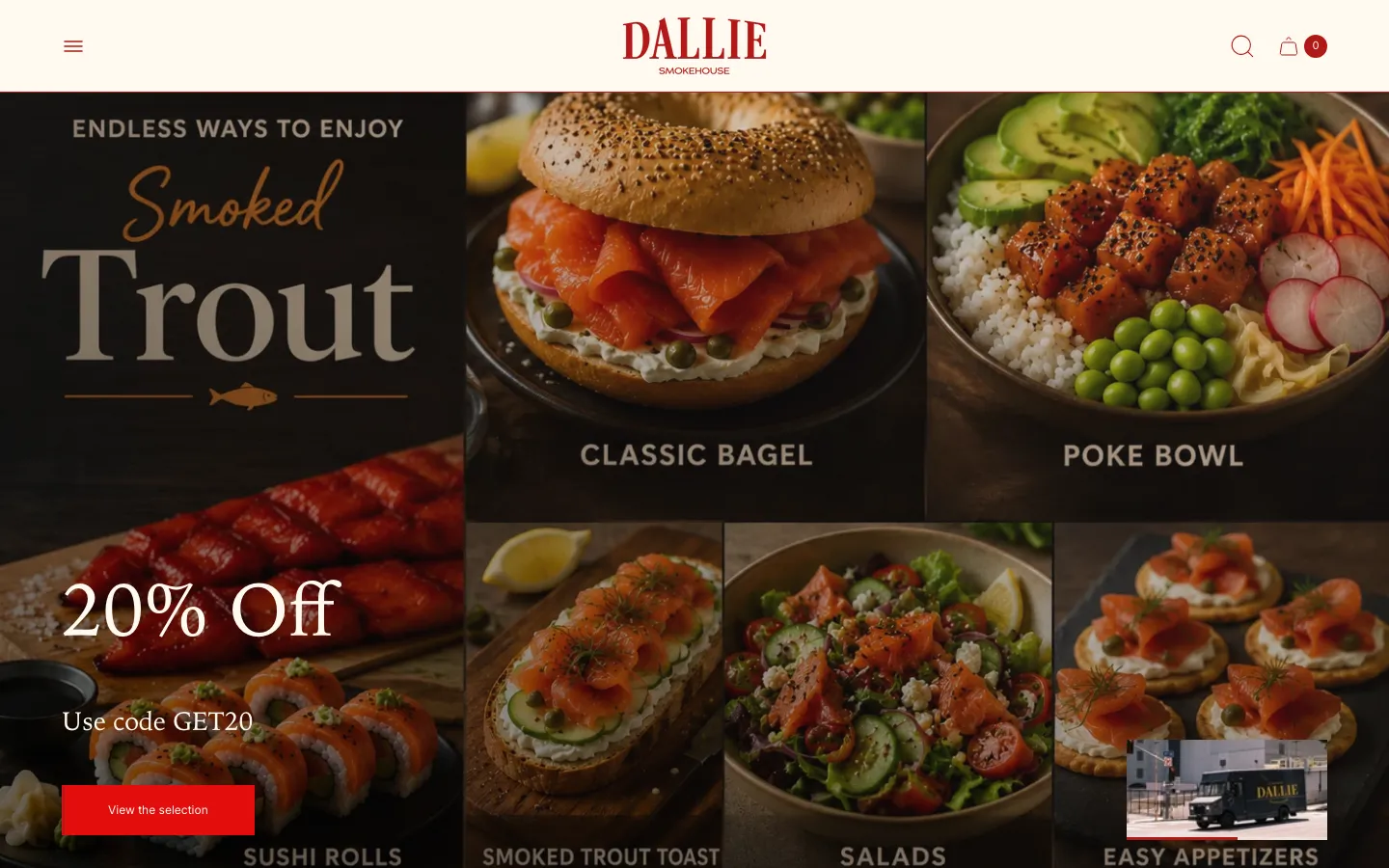
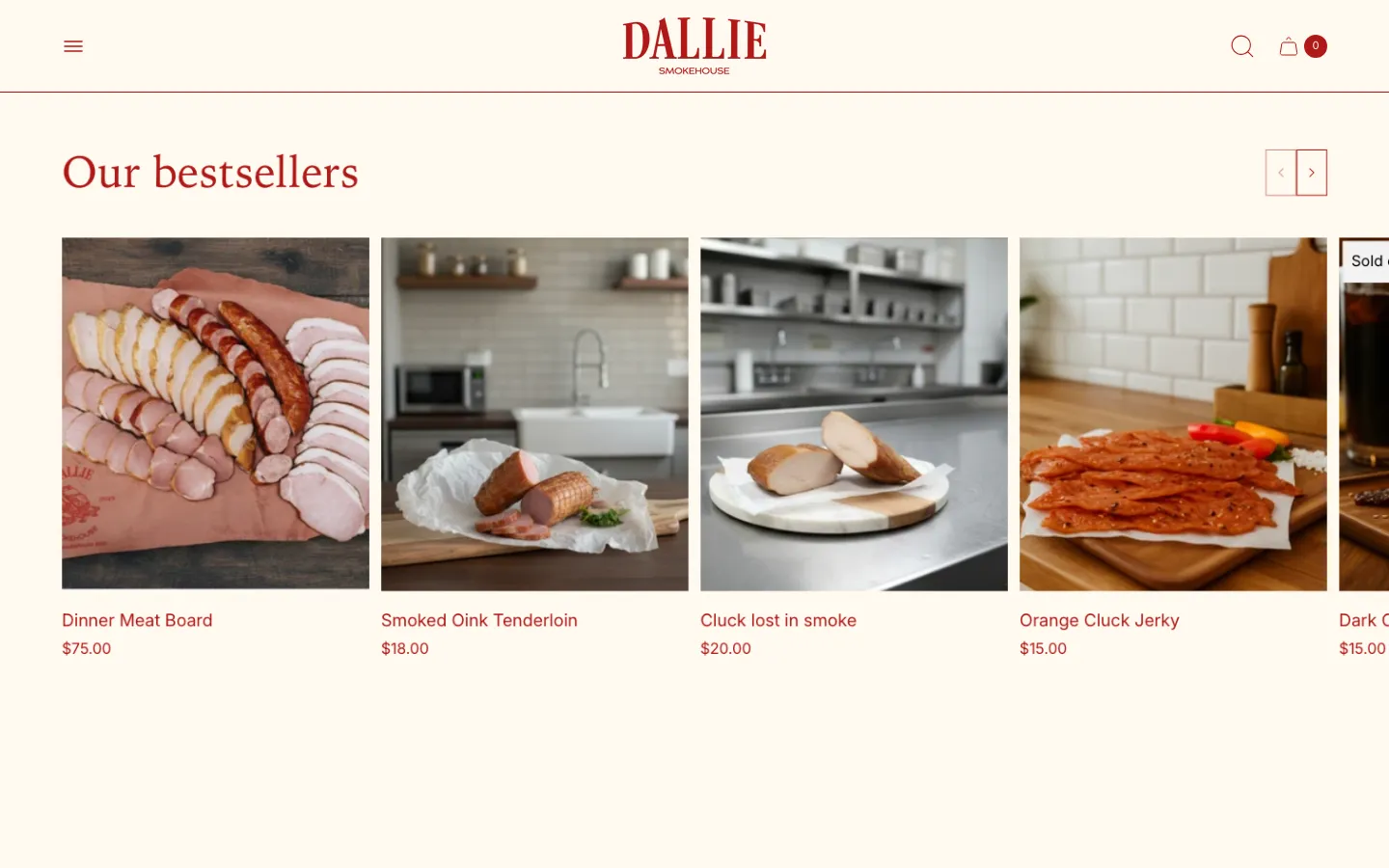
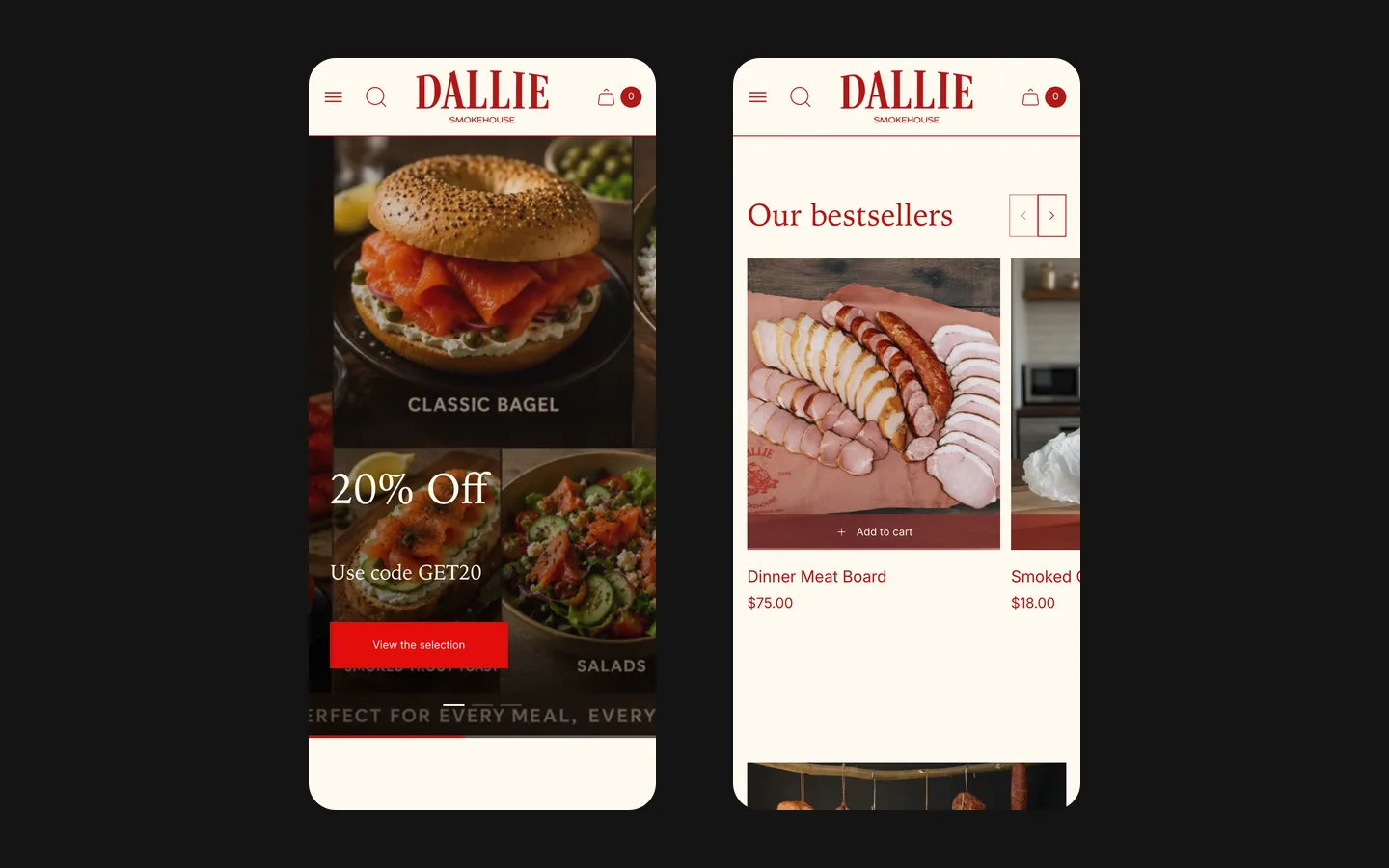
The homepage uses a cream header, a red wordmark and a strong product-led image. This gives the food a large visual presence while leaving the store controls easy to identify. The brand is not restricted to a logo above a generic template: its colour and typographic character continue into the presentation of the offer.

A food identity also has to work away from the opening screen. A label, a product thumbnail and a social image provide much less space than a desktop hero. The branding addresses that continuity through a mark, palette and application rules. For a similar business, reviewing the identity at these smaller sizes is more useful than approving only an impressive presentation slide.

Different buyers, different questions

A retail customer
Someone choosing a product or a gift set needs to understand the selection and move towards a purchase. Product presentation, the cart and checkout serve this journey. The business still needs to supply accurate product details and fulfilment conditions; visual styling cannot make those decisions.
A wholesale customer
A restaurant considering supply may need to discuss terms before buying. The site gives wholesale enquiries a separate path, so a commercial buyer does not have to treat the retail cart as a quotation request. This does not imply a complete wholesale ordering portal.
The store owner
The client manages products, promotions and collections in Shopify. The administrative job is different from browsing: someone must keep the offer current, check enquiries and maintain the commercial information that accompanies each product.

Why the imagery needs a defined role

The project record includes AI-assisted mood visuals where photography was not yet available. A mood visual can establish an atmosphere or illustrate a serving idea. It should not be used as unverified evidence of the exact package, portion or product a customer will receive. Those distinctions are especially relevant to a food store, where the purchase depends on concrete product information.

For a comparable project, we would separate brand imagery from product documentation during content preparation. The owner supplies the facts about the item and approves the way it is shown. Generated visual work remains subject to that responsibility. A useful review places the image beside the product name and description, so the atmosphere supports the offer without obscuring what the buyer will actually receive.

From identity to a maintainable shop

  1. Set the visual rules

    Agree the mark, palette and applications before extending the design across the catalogue. Packaging and digital surfaces can then be assessed together. The identity should still be recognisable when a customer sees a small product image rather than the full homepage.

  2. Separate the buying paths

    Let a retail visitor browse and purchase while giving a business buyer a clear enquiry route. The two paths can share the brand and product story without pretending that their ordering conditions are identical.

  3. Hand over the live offer

    Give the store owner a manageable way to change products, collections and promotions. New content should continue to follow the agreed brand rules so the site does not gradually become a mix of unrelated campaign styles.

A useful reference for a new food brand

Dallie received an identity and a Shopify store, with retail browsing and a separate wholesale enquiry route. Store and payment accounts belong to the client. The same visual character connects packaging, product presentation and digital materials, while the two commercial audiences keep appropriate next steps. A producer planning similar work can use this project to discuss both the brand applications and the practical structure of the offer.

A good brief for similar work starts with the actual assortment, the markets being served, the available product photography and the difference between retail and business orders. Packaging material is useful because it reveals how the brand already behaves in the customer’s hands. If the identity is new, those applications should be considered alongside the site rather than postponed until after launch.

For a new store, the useful starting point is a representative product with its real description, packaging and available images. Add the questions a retail buyer asks and the information needed for a wholesale discussion. This exposes the relationship between presentation and ordering before the full catalogue is prepared. It also helps distinguish reusable brand elements from details that must change with each product.

A brand carried from the label to the order

The identity and Shopify store connect product presentation, retail checkout and a separate wholesale enquiry path. The client manages products, collections and promotions.

Useful when a product brand sells to individuals and also needs enquiries from trade buyers. Separate the two buying paths in the brief and name the packaging and digital materials required.

Prepare a brief for a similar project

What the site does

Project features

  • Gift boxes and sets

    Products a person buys for someone, with the story on the page.

  • Wholesale path

    A restaurant asks for terms without going through the retail cart.

  • Identity on every application

    The same mark on the label, the store and the feed.

  • Shopify checkout

    Payments and delivery handled by Shopify, run by the client.

  • AI visuals, labelled

    Product mood images made with AI where photos did not exist yet.

  • Edited by the client

    Products, promotions and collections without a developer.

“The site is great. It is easier to navigate and it answers a lot of the questions people have. I really like it.”
Dallie Smokehouse · Hospitality · Food (US) · translated from the original

OriginalСайт крутой! Легче navigate и на многие вопросы есть ответы. Мне очень нравится.

Questions

About Dallie Smokehouse

What is the Dallie Smokehouse store built on?

Shopify, as checked on the live site in September 2026. Payments, delivery and the store account are in the client’s name.

Did HeadPills design the Dallie Smokehouse brand?

Yes. The identity came first: a mark with a craft character, a palette that suggests smoke, and rules that hold on packaging, in the store and in a feed.

How does the Dallie Smokehouse site serve both retail and wholesale?

A gift buyer shops the store; a restaurant asks for wholesale terms through a separate path. Neither wades through the other’s pages.

Start a similar project.

Tell us what your site has to do. A short call, then a fixed price in writing.