Case · Energy

GM Engineering: a company website in Bulgarian and English.

A Webflow presentation for a Bulgarian engineering company: services, project material, partner information, documents and contacts. The case examines the information structure and visual design.

  • Energy
  • Engineering
  • Webflow
  • BG · EN
  • Bulgaria
gm-engineering.bgGM Engineering website preview
Information structure

Services, projects, partners, documents and contact. project record and saved screen

BG + EN

Bulgarian and English versions in the recorded scope. project record and saved screen

Webflow

An editable company presentation. project record and saved screen

The project

Task, approach and delivery

The task

The company needed a public presentation that would organise technical subjects and provide a clear route to contact.

The brief included Bulgarian and English information routes, with a consistent navigation structure.

The approach

We gave activities, projects, partners, documents and contacts distinct places in the navigation.

A light header and large industrial imagery establish the visual setting; content sections explain the company’s work.

What we delivered

A Webflow site in Bulgarian and English with services, projects, partners, certificates and contacts, edited by the company. Domain and hosting in the client’s name.

A bilingual structure for an engineering company’s public information

GM Engineering’s website project brought services, projects, partner material, certificates and contact information into a Webflow presentation in Bulgarian and English. The relevant design problem was organisation: different readers need different levels of detail, yet should recognise the same company and find the appropriate contact. Our scope concerns that website structure and presentation; engineering qualifications and the validity of supplied documents remain separate matters.

An industrial subject with a simple navigation layer

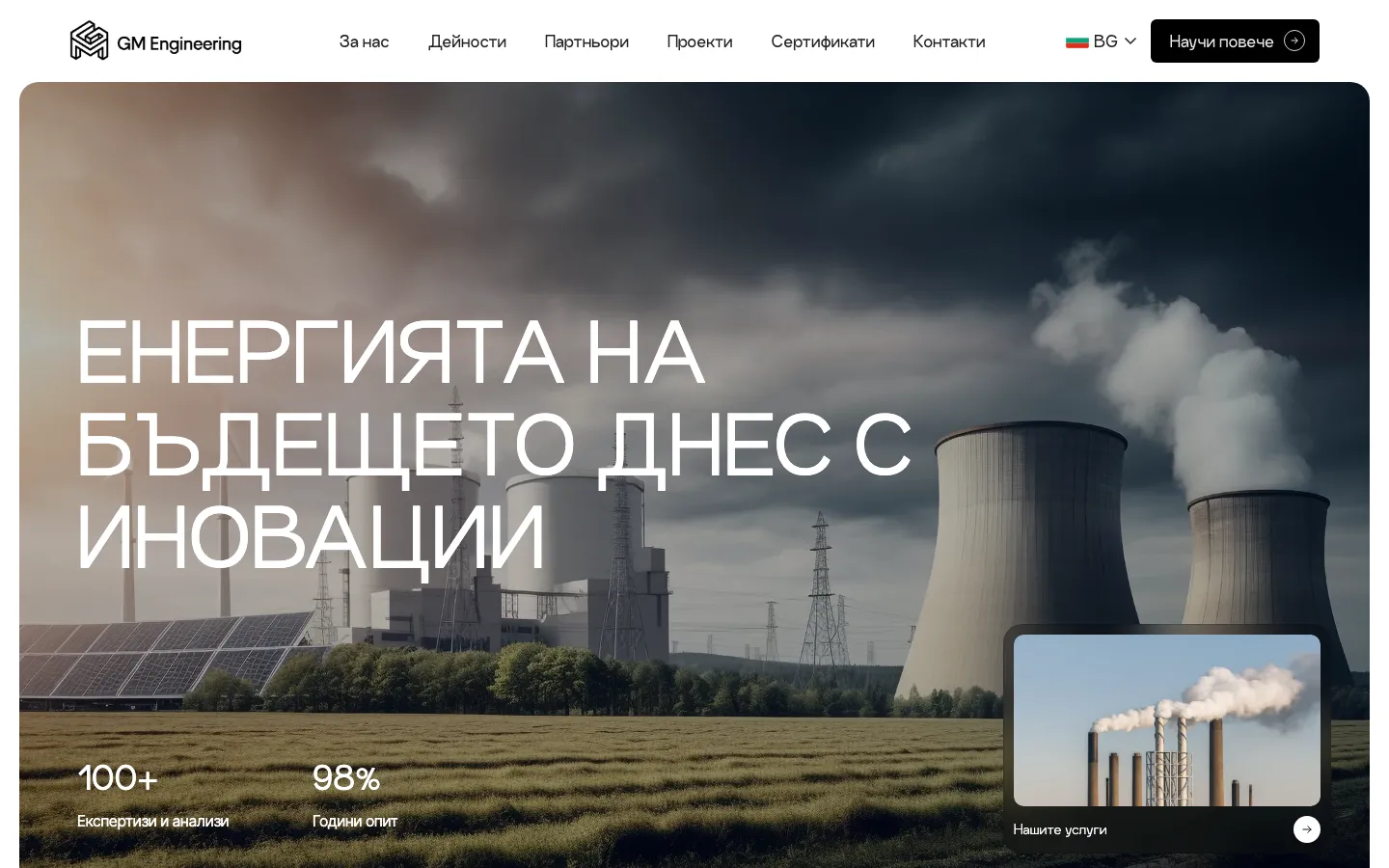
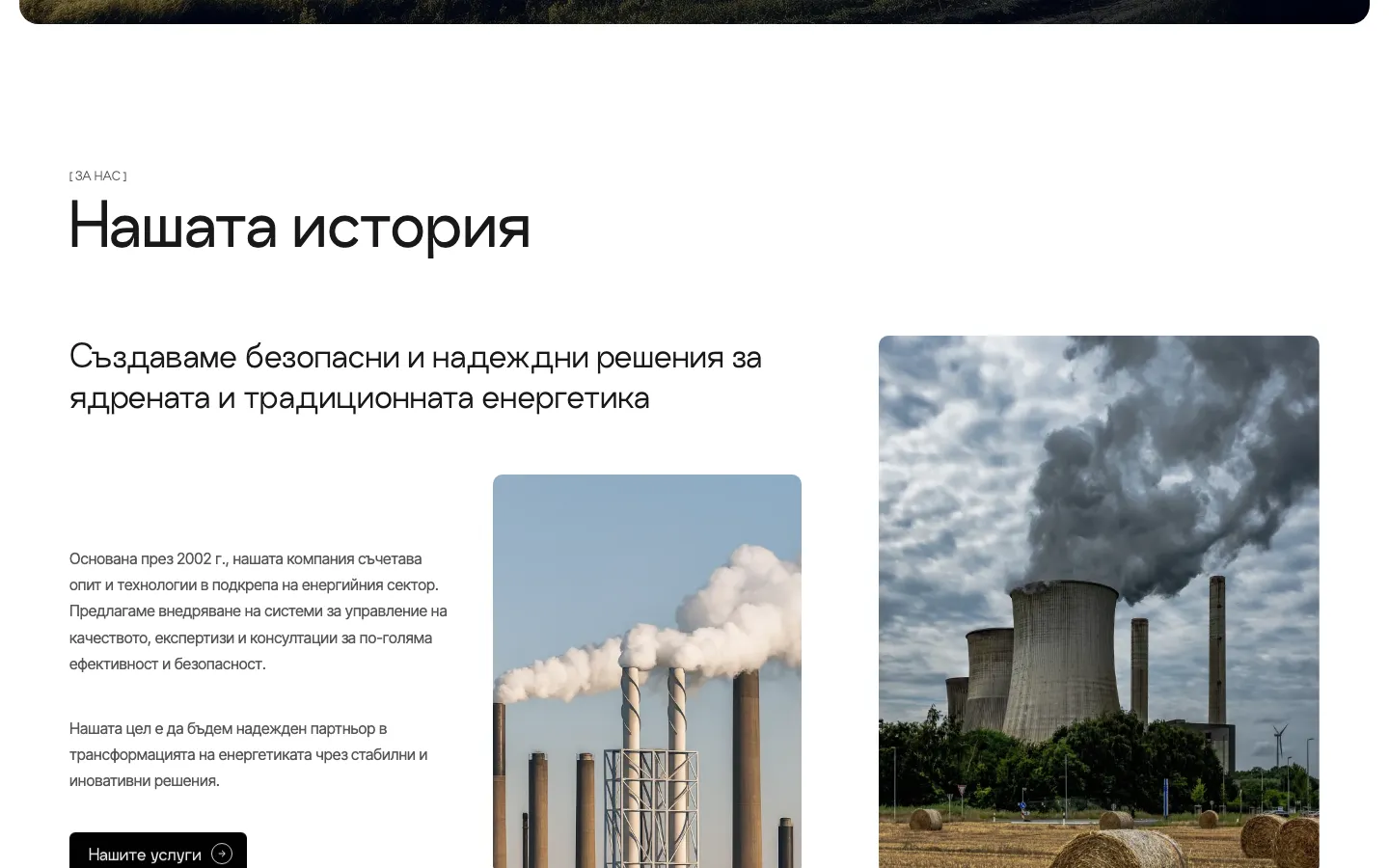
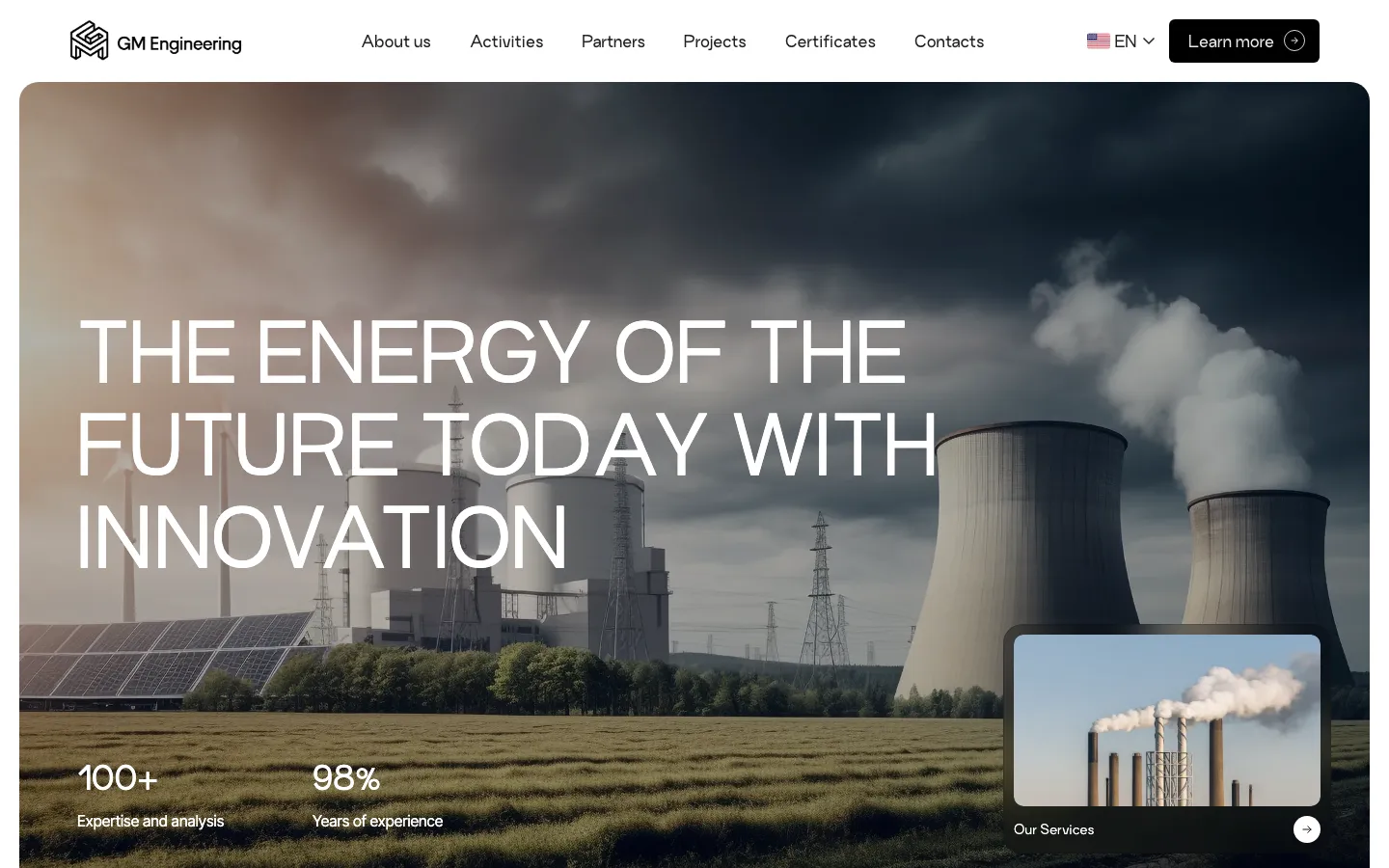
The saved homepage has a white navigation bar above a broad industrial image. The geometric company mark and name occupy the left, while the main sections and language selection sit on the same line. The image combines several energy references, and a large white heading supplies the main statement. A smaller service card in the lower corner provides a second way to continue into the offer.

This gives the opening two levels: the general sector context and the practical route into services. The photography establishes a subject, but it should not automatically be read as proof that the company designed or operated every installation visible in the composition. On an engineering website, a credited project needs its own description. Keeping atmospheric imagery separate from a documented reference protects the meaning of both.

Different sections answer different questions

Activities and services
This is where a reader establishes whether the company’s field of work is relevant to their enquiry. Descriptions need a clear boundary around what is offered. In a comparable brief, the technical team should approve terminology and scope before a designer condenses it for a card or navigation label.
Projects and partners
These areas provide a place for attributable work and relationships. A useful project entry identifies the company’s role rather than relying on the recognisability of an industrial photograph. Partner material should describe an authorised relationship. A logo alone cannot explain what was delivered, when the relationship existed or what permission covers its publication.
Certificates and contact
Documents and an appropriate contact help a reader continue their own verification. The interface can make material accessible, but it cannot validate a certificate through its visual treatment. For a similar site, we would ask the client to provide the approved document, its context and the person responsible for keeping it current.

A website that can be read in parts

An engineering presentation is not always read from the first screen to the footer in one sitting. Someone may arrive through a service link, return to a project or send a particular page to a colleague. The recorded structure gives the main subjects their own navigation labels instead of relying entirely on one long company introduction. This makes the information easier to refer to without assuming a single reading sequence for every visitor.

For a comparable project, each page should carry enough context to work when opened directly. The company name, subject and next action should remain understandable without requiring the reader to reconstruct the route from the homepage. This is especially useful when a link is shared inside another organisation. It is a practical design requirement, not evidence that a specific purchasing committee followed that route in this case.

The same principle applies to short project summaries. A title and photograph may be enough to invite further reading, but they are not a complete technical reference. We would agree which details can be published and which should remain in a later conversation. Public information can establish relevance without reproducing confidential documentation or implying that a marketing page contains everything required for a supplier assessment.

Bulgarian and English as related information routes

The project records specify Bulgarian and English versions. A language control in the header makes the relationship visible. For this kind of presentation, translation needs to preserve the scope of services and the meaning of document labels. A more fluent English phrase should not quietly widen the company’s stated capability or change a project role from participation into sole delivery.

Reviewing a similar bilingual website means matching corresponding information across versions: services, project titles, contact details and document references. The two languages do not need identical line breaks, but they do need equivalent meaning. A technical reviewer and an editor may have different responsibilities here. The reviewer confirms the subject; the editor makes it readable without changing what the company can substantiate.

A content review sequence for a technical company

  1. Confirm the source material

    Assign an owner to each service description, project reference and document. Ask whether the material is approved for public use and what date or context matters. This produces a usable content set before layout work and avoids treating a draft number or sample heading as a verified business fact.

  2. Build the page relationships

    Connect services to relevant project material and give documents their own clear location. Review whether a reader can understand the relationship without interpreting internal company terminology. For a new site, the goal is a coherent information structure, rather than the largest possible number of apparently impressive sections.

  3. Check the published versions

    Review the actual pages in both languages, including short labels and downloadable files. Look for unfinished text, mismatched units and links that do not open the intended document. A page can be technically available and still need editorial correction. Content acceptance should therefore be distinct from successful deployment.

What the editing system is responsible for

Webflow is the platform recorded for the project, with editable company content. A prepared content structure can make updates to projects and documents more orderly. It also makes responsibilities visible: somebody has to approve a new reference, replace an outdated file and check the corresponding translation. The ability to publish is not the same as authority to confirm an engineering statement.

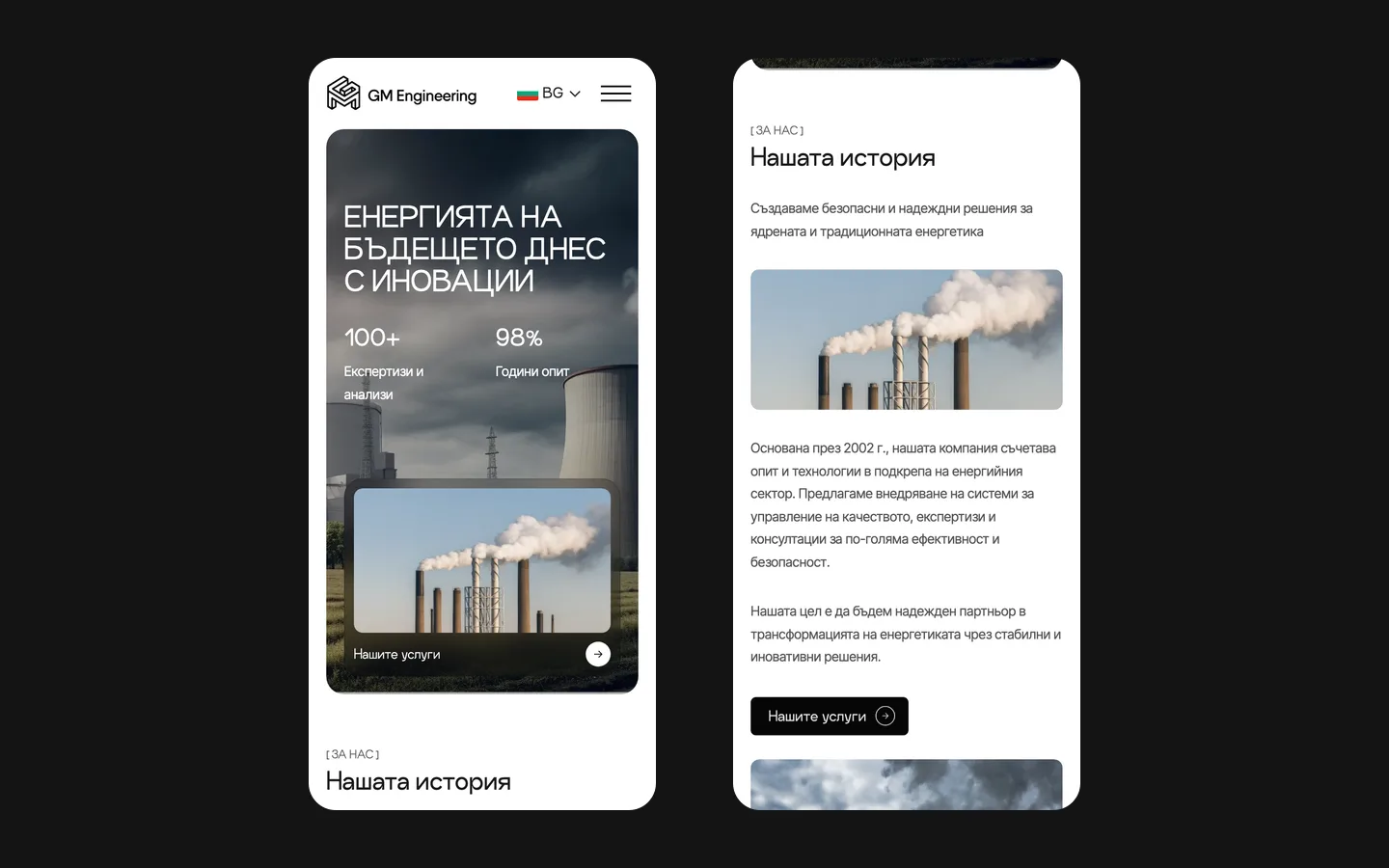
For a similar handover, we would identify the ordinary updates the team can perform and the changes that require a layout review. A longer project title or an additional document field can affect the page even if no code is edited. The handover should show how to check the result after publication, especially on a phone where navigation labels and document names have less horizontal space.

The result and its practical boundary

The case demonstrates a public website structure for an engineering business in two languages. Saved screens show its visual organisation, and the project records describe the Webflow implementation. We do not use the page’s numerical labels or document cards as independently verified measures of experience, certification or business performance. Nor do we claim a measured change in contracts or sales from the website without supporting records.

If you need a comparable presentation, prepare approved service descriptions, publishable project references and the documents your team is authorised to share. Identify who will answer an enquiry and who will maintain each language. With those inputs, the design can give visitors a clear way to establish relevance and ask an informed question. The useful outcome is an understandable company presentation whose factual content has a defined owner and review process.

What the site does

Project features

  • Find the subject

    Navigation separates the main information areas.

  • Project material

    A place for client-approved descriptions of work.

  • Document section

    A separate location for supplied certificates and related information.

  • Language choice

    Bulgarian and English routes through the presentation.

“An engineering company needs a site that inspires confidence: projects, capabilities, contacts, no noise. HeadPills delivered a clean, solid site on time and explained every step in a language we understood.”
GM Engineering · Engineering, Bulgaria · approved by the client

Questions

About GM Engineering

What is the GM Engineering site structured around?

The structure separates activities, projects, partners, documents and contacts. The website presents supplied information; it is not an independent verification of qualifications.

Is the GM Engineering site in English as well as Bulgarian?

Bulgarian and English versions are included in the project records. The language control is in the header.

What platform is GM Engineering built on?

Webflow, with editable project, partner and document material according to the project records.

Start a similar project.

Tell us what your site has to do. A short call, then a fixed price in writing.