Case · Manufacturing

SeedWay Oil: products and purchasing on a multilingual website.

A Webflow site for a sunflower processor with separate routes for product buyers and raw-material suppliers. Ukrainian, English and Russian versions connect the range, services and purchasing with an enquiry.

  • Manufacturing
  • Agriculture
  • Webflow
  • UK · EN · RU
  • Ukraine
seedwayoil.com.uaSeedWay Oil website preview
3 languages

Ukrainian, English and Russian, each its own pages, for buyers in different markets. project record and saved version

Products and purchasing

Oil, technical oil, meal, briquettes, pellets; purchasing of sunflower, soy, rapeseed, wheat, barley and cakes. project record and saved version

Built on Webflow

Products, services and news edited by the plant’s team without a developer. project record and saved version

The project

Task, approach and delivery

The task

The company needed to present processed products and give suppliers a clear route into purchasing.

Product information, services, a briquette brand section and news had to remain distinguishable within one company website.

The approach

We separated products, services and purchasing in the navigation, with a language choice in the header.

An agricultural visual opening leads into the company information and contact routes. The content structure supports client editing.

What we delivered

A Webflow site in Ukrainian, English and Russian: products, services, purchasing, the trademark for briquettes, a blog and a request form, run by the client. Domain and hosting in the client’s name.

One industrial website for product buyers and raw-material suppliers

SeedWay Oil needed a public presentation for two directions of business: offering processed products and purchasing agricultural raw materials. The project records describe a Webflow site in Ukrainian, English and Russian, with products, services, purchasing, a briquette brand section, news and enquiries. Its structure is useful to examine when a company both buys and sells, and the same contact message can otherwise reach the wrong conversation.

Make the two directions visible from the start

A product buyer and a raw-material supplier may use some of the same industry terms while wanting opposite things. One asks what the company can deliver; the other asks what it is prepared to purchase. Placing purchasing in the main navigation makes that distinction visible. It gives the supplier a clear starting point rather than requiring them to reinterpret a product catalogue as an invitation to sell to the plant.

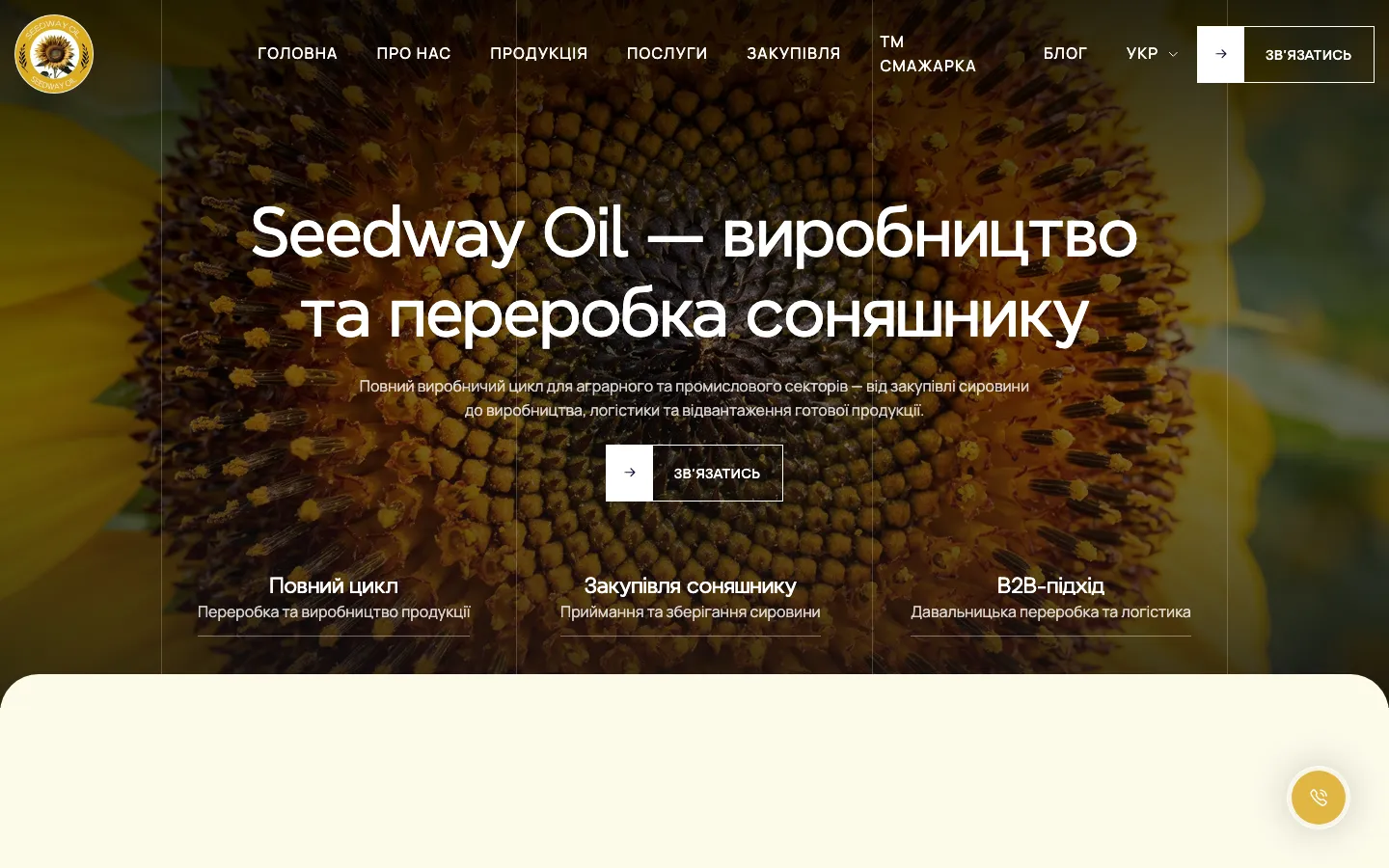
The saved header separates products, services and purchasing, alongside company information and the briquette brand. This is an information architecture decision with a practical consequence: an enquiry can begin with the right subject. For a similar brief, we would map incoming questions by direction before deciding which form or contact route each page needs. The site should reflect the actual organisation of commercial conversations, not simply list every activity in one paragraph.

An agricultural image with a strong graphic frame

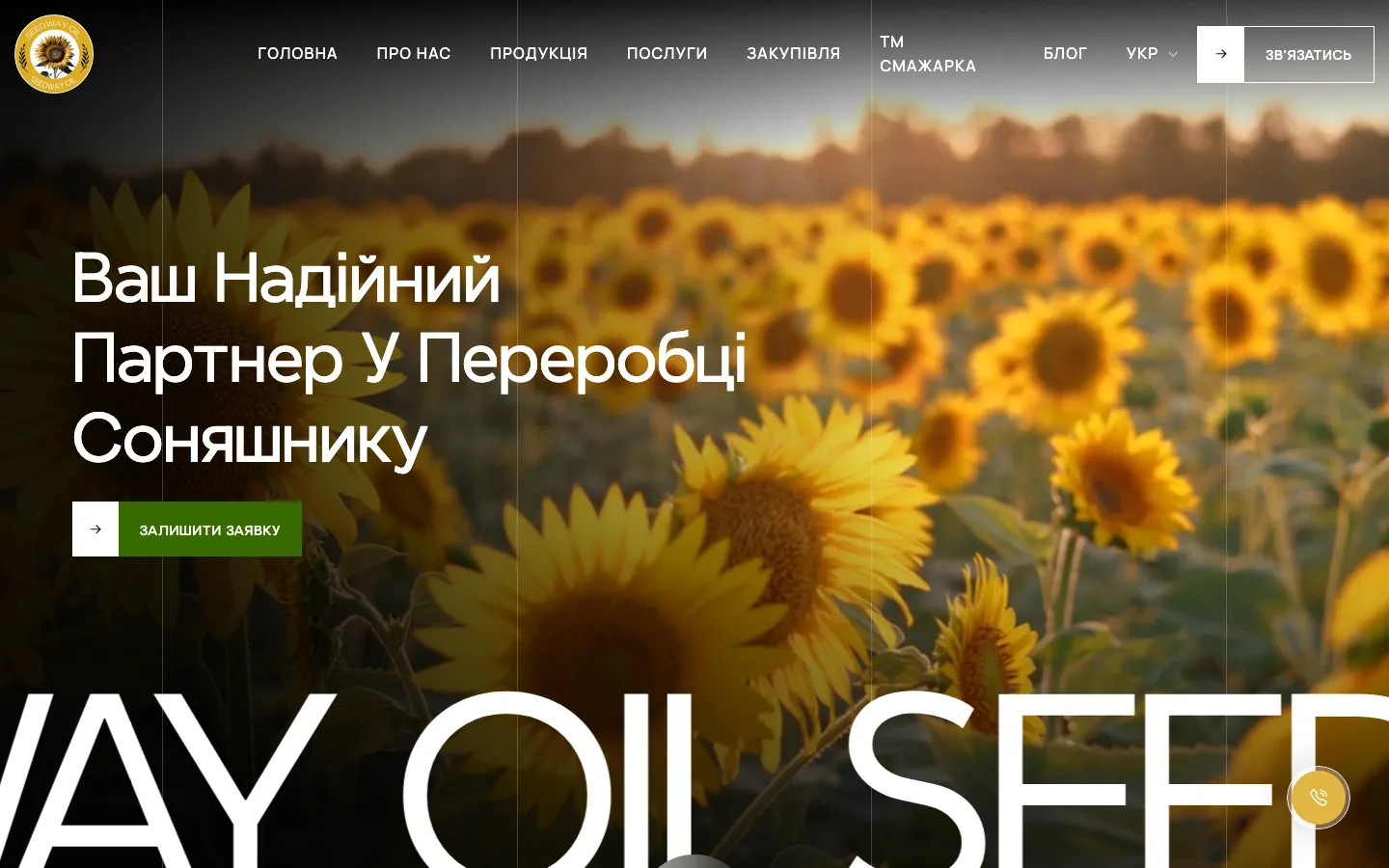
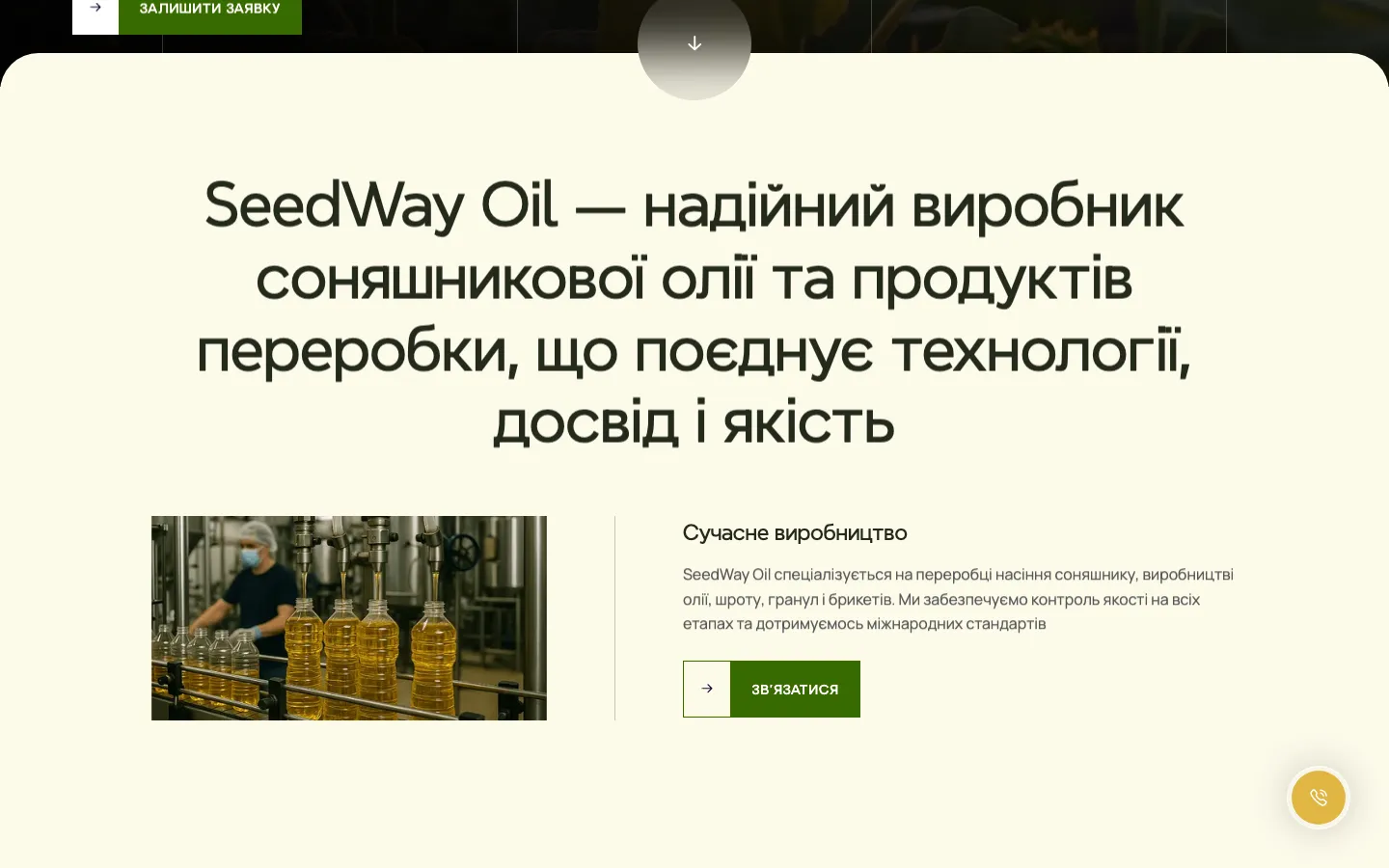
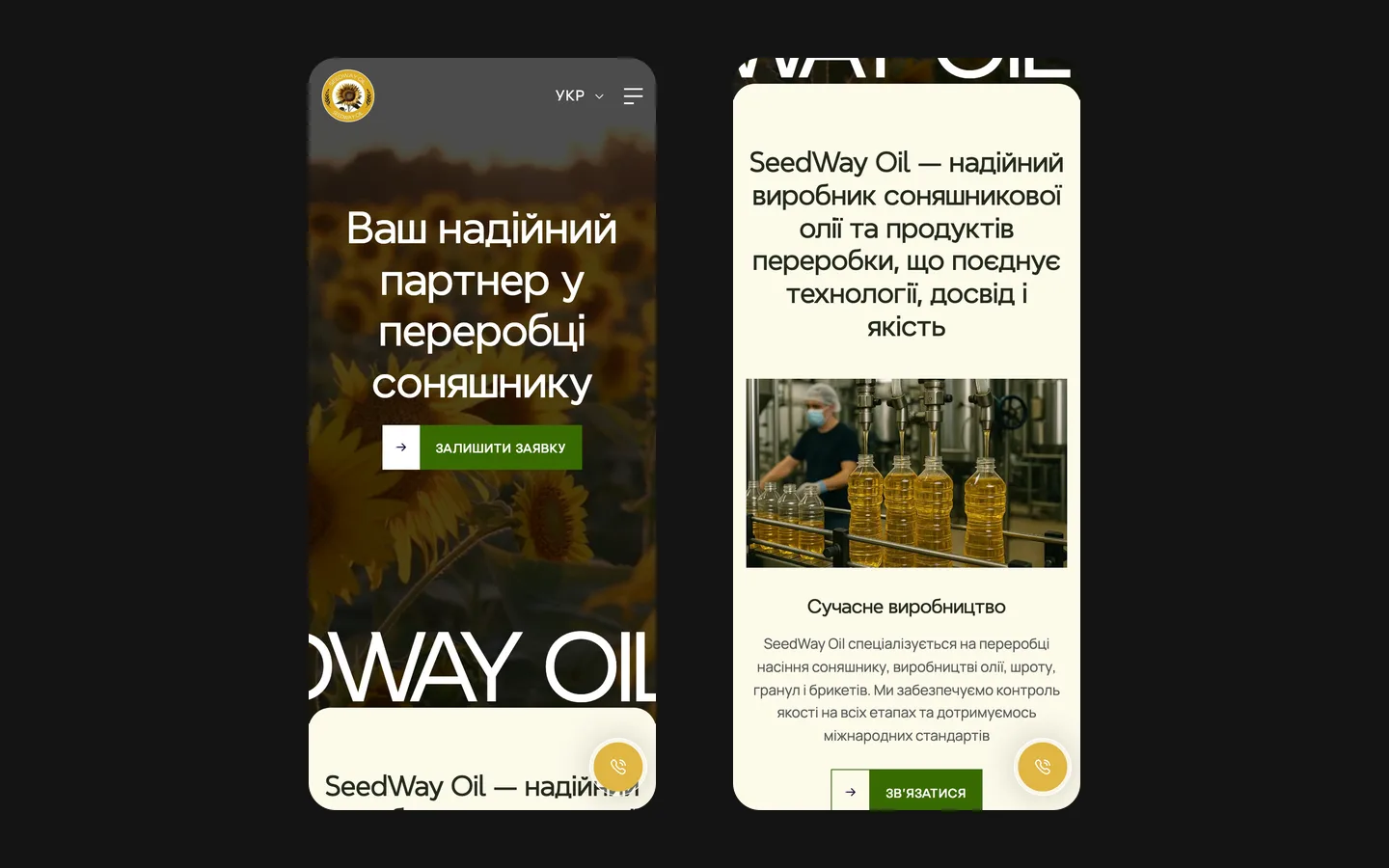
The saved opening shows a sunflower field with a dark overlay behind large white text. Fine vertical lines organise the composition, while the company name appears at a much larger scale near the lower edge. The green enquiry button combines a text area with a separate white arrow cell. A round phone control provides another contact option. The palette connects the agricultural subject with a clear hierarchy of actions.

The field establishes the category of the business. It is not a photograph that independently confirms the company’s production capacity or ownership of a particular facility. Those claims need separate material and client approval. For an industrial presentation, this distinction helps the visual opening remain expressive while leaving evidence about equipment, output or documentation to the sections where it can be explained properly.

What belongs in each part of the offer

Processed products
The recorded catalogue includes oil and other outputs of sunflower processing. Each product family needs its own explanation so the reader can identify the relevant enquiry. In a similar project, specifications and units would be supplied and approved by the plant. A designer should not infer a grade, packaging format or current availability from a product name.
Purchasing
The purchasing route addresses suppliers of grain and oilseeds. Its task is to explain the company’s buying interest and how to begin a conversation. For a comparable site, accepted materials, current conditions and the person responsible should come from the purchasing team. They should not be copied from the sales catalogue as though the two directions were interchangeable.
Services and the product brand
Services and the briquette brand have distinct places in the project structure. Keeping them identifiable prevents every business activity from being forced into one product template. A reader can understand whether they are viewing a processing service, a material category or a branded offer before choosing the appropriate way to contact the company.

Specifications need a clear editorial contract

Industrial product information often contains short terms that carry a precise meaning for the buyer. The website team’s role is to make those details readable and consistently arranged. For a new commission, we would agree the required fields with the client before creating a repeatable product layout. If a characteristic is not confirmed, it should remain an editorial question rather than being completed from another supplier’s catalogue.

A useful content set also distinguishes a general product description from the terms of a particular shipment. The website can introduce the range and make a request understandable, while quantity, timing and documentation may need confirmation for the actual transaction. We do not describe this project as a live inventory system or an automated export ordering platform. Those functions are not established by the recorded website scope.

Documents require the same discipline. A visible document area or a statement that paperwork exists is not an independent validation of a business. For a comparable project, approved files should have understandable names and a clear relationship to the product or company information they support. The person maintaining the site needs to know which version is current and who may authorise its replacement.

Three languages, one consistent commercial meaning

Ukrainian, English and Russian are the three versions recorded for the project. Their purpose is to make the same business presentation usable in different language contexts. The important alignment concerns product names, the difference between buying and selling, and the meaning of the enquiry. A translation that reverses a commercial direction creates a more serious problem than an uneven line break in the heading.

For a similar multilingual site, we would review representative product and purchasing pages together. Units, descriptions and contact labels need a common reference, even if the sentence structure changes. The reviewer should understand the company’s terminology. Translation should not create a new specification, imply an additional certification or extend a service area simply because a more expansive phrase sounds better in another language.

A practical preparation sequence for a plant website

  1. Separate sales and purchasing material

    Collect the product range and purchasing requirements from their respective owners. Record which questions each team wants to receive and where those enquiries should go. This avoids designing a general form first and discovering later that the most important distinction is missing from the message.

  2. Prepare approved product information

    Gather the descriptions, suitable imagery and publishable supporting files. Agree which details belong to a stable page and which must be confirmed for a particular request. For a new site, this creates a reliable content structure without presenting changing commercial conditions as permanent facts.

  3. Review the complete language routes

    Follow a product enquiry and a purchasing enquiry in each language. Check whether the subject remains clear through navigation, page content and contact. Also review how a new editor would update the same material later. A successful launch is useful only if ordinary changes can preserve the original distinctions.

A site the team can maintain

Webflow was used for the documented website, with products, services and news intended for client editing. That gives updates a defined place within the presentation. A new article and a revised product description have different roles, so the publishing structure should keep them recognisable. News should not become the only place where an essential correction to the main offer is recorded.

For a comparable handover, we would establish a review step when specifications or purchasing conditions change. An editor can publish a field without knowing whether the underlying business statement is still correct. Assigning a content owner is therefore part of a useful operating process. This case does not claim that the team has required no support at any point since launch; the documented deliverable is an editable site.

What this case can demonstrate

SeedWay Oil demonstrates an industrial presentation organised around products, purchasing and contact across three languages. It shows how a company with two commercial directions can give each audience an intelligible route. We do not publish export revenue, contract values or a measured increase in qualified enquiries for this project without supporting records.

For your own plant or supplier website, bring approved range information, the distinction between sales and purchasing, and the materials your team can publish. We can then shape pages around the decisions a visitor actually needs to make. The aim is a specific, understandable enquiry that reaches the appropriate team, with the website’s visual character supporting a clearly described business rather than standing in for its evidence.

What the site does

Project features

  • A clear subject

    The company range and business directions have distinct places.

  • Sales and purchasing

    Separate routes for product buyers and suppliers of raw materials.

  • Three languages

    Ukrainian, English and Russian versions.

  • Editable content

    Products, services and news can be maintained by the client.

“They built the presentation site for our plant. What I liked most is that the team really hears what you need and calmly adjusts to feedback. Clean work, thank you.”
SeedWay Oil · Oil production · translated from the original

OriginalРобили нам презентаційний сайт заводу. Найбільше сподобалось, що команда чує, що тобі треба, і спокійно править під фідбек. Все акуратно, дякую за роботу.

Questions

About SeedWay Oil

What languages is the SeedWay Oil site in?

Ukrainian, English and Russian versions are included in the project records.

What does the SeedWay Oil site have to prove to an export buyer?

The structure separates products, services and purchasing so a reader can identify the right subject for contact. It is not an independent verification of volumes or documents.

Does the SeedWay Oil team run the site on its own?

The recorded delivery is an editable Webflow website. We do not claim that the company has needed no assistance at any point since launch.

Start a similar project.

Tell us what your site has to do. A short call, then a fixed price in writing.