Web design for businesses in Porto.
A website or store for your Porto business, with clear product information and a practical way to buy or enquire. HeadPills plans the design, catalogue and agreed integrations remotely from Wrocław. We can coordinate in English and implement Portuguese content with your appointed reviewer.
- Retail
- Choose → pay
- Wholesale
- Select → request terms
- Service
- Describe → discuss
Should your Porto business have a catalogue or a store?
The important distinction is whether the customer can make a complete buying decision from the information on the page. If the item, price, delivery and availability are defined, an online store may be appropriate. If the specification or commercial terms change with each order, a catalogue and a focused enquiry can be more useful. We establish this distinction before choosing software, so that the website supports the way your company actually sells.
A purchase the visitor can complete
For a direct purchase, the product page must explain the selected variant, quantity, price and fulfilment conditions. The customer should understand what is included before reaching checkout. A beautiful grid of photographs is only the start: the store also needs a reliable order process behind it. We ask who updates stock, handles payments and answers delivery questions, and which of those tasks already has an established system.
An order that needs a conversation
For a trade enquiry, preserve the products and quantities that interest the buyer without pretending to confirm a price or delivery date. A sample request and a wholesale order may require different information. Both can live beside a retail store if their routes are clearly labelled. InvestPorto describes a varied business environment spanning services, creative work and other activities; we use your actual customer process to decide which route belongs in your project.
Prepare product information before the design becomes fixed
- A representative sample
- Choose several real products for the design exercise, including one with many options and one with missing information. Define the fields that help customers compare: dimensions, material, compatibility, care instructions or another relevant property. Do not import a large spreadsheet until the model works with these examples. Cleaning terminology and identifying missing values early prevents the layout from becoming a collection of exceptions later.
- Images and variants
- Agree the relationship between a product, its variants and its images. Colour names, sizes and stock references should follow one system. Photography needs consistent framing where comparison matters, while contextual images can show scale or use. Confirm rights to the supplied images and decide which crop is safe on a phone. Files should remain traceable to the relevant product so that future updates do not rely on someone recognising hundreds of unnamed pictures.
- Descriptions and languages
- Portuguese and English descriptions need consistent product facts even if their explanations differ. Decide who maintains the master information and approves each translation. Brand names may stay unchanged, while materials, instructions and navigation require proper localisation. Avoid publishing a second language with only the menu translated. A buyer who switches language should still find the relevant variant, delivery conditions and a usable route to the next step.
Map the work that starts when an order arrives
Who receives it
Define the destination of a retail order, a wholesale enquiry and a service request. They may go to different people. The notification should include enough context to act without forcing staff to reconstruct the customer’s path. For quotation requests, agree who owns the response and how duplicate messages are recognised. This is an operational decision before it becomes an integration task.
What confirms payment
Choose payment methods only after checking what the selected provider supports for the business, market and account. A method popular in a country is not automatically available to every merchant. The implementation should distinguish an initiated checkout, confirmed payment and a failed or abandoned transaction. Do not treat arrival on a thank-you page as conclusive evidence of a paid order without the appropriate provider confirmation.
What changes the status
Decide how fulfilment updates reach the customer and the website. A small catalogue can use a manual workflow; a busier operation may need a connection to an existing system. In either case, document how cancellations, refunds and unavailable items are handled. Automated exchange requires an accessible interface, permissions and a failure plan. These are scoped after inspection, not promised as a generic connection to any software.
Select the platform by catalogue and maintenance needs
The right implementation depends on what the team needs to run, not solely on the visual design. Shopify and WooCommerce both have established product structures, but their hosting, extensions and operational responsibilities differ. Test your representative catalogue against the intended system. A useful evaluation includes the less ordinary product and the everyday edit, not just a polished demo store with ideal sample data.
Shopify or WooCommerce
Shopify can provide the core store infrastructure within a hosted service; WooCommerce builds on a WordPress installation whose maintenance must be assigned. Either may require paid additions for particular functions. List subscriptions, extensions, payment fees and support separately from design and development. Imports also need verification: a file format supporting a field does not prove that every image, variant or special extension setting has migrated correctly.
A custom catalogue or website
An individual coded site can suit a focused product presentation or catalogue with a deliberately limited interaction model. AI-assisted development can help implement the agreed design, but custom code still needs testing and ownership. If a mature store system already handles orders well, redesigning the presentation may be more sensible than replacing the entire operation. We define which part changes and which part remains responsible for commerce.
Review the whole buying journey before launch
Read and choose on a phone
Check the longest product title, important specifications, variant selection and image enlargement on a narrow screen. Make price and purchase conditions easy to locate. For a quote request, the customer should see which item is being discussed. Test keyboard navigation and meaningful form errors. Where a formal accessibility assessment is required, define that separate scope; a basic design review should not be advertised as proof of complete compliance.
Test real transaction states
Use authorised test procedures to check order creation, notifications and agreed failure cases. A successful payment test alone does not demonstrate that the warehouse or responsible person received the right information. For manual enquiries, verify delivery to the business’s working channel. Record the difference between a test and a real customer transaction so that analytics and internal reporting do not present setup activity as revenue.
Protect existing entry points
If the old site has useful product URLs or links from partners, prepare their destinations before switching over. Avoid redirecting every discontinued product to an unrelated homepage. Keep explanations for changed or unavailable offers where they help customers. Review the sitemap, internal links and language equivalents in the completed build, then monitor actual issues after publication rather than assuming a new design is automatically easier for search engines to understand.
What determines the estimate for a Porto website?
Send a small catalogue sample
For an initial discussion, send your current website, a few representative products or services, the intended languages and a description of how orders are handled today. Tell us whether customers buy immediately, request a sample or negotiate terms. Add the systems that must remain in place and the person who will maintain the public information. This makes it possible to define a first release that the team can operate.
HeadPills starts simple coded websites at €500, custom website design at €1,000 and online stores at €2,000. The final estimate depends on the catalogue, content, migration and functions agreed for your project. Photography, translations, recurring platform costs and ongoing operation are identified separately. We work remotely from Wrocław and use shared previews for review; we do not imply a Porto office or an unverified local project history.
See the scope in published projects
Examples from our portfolio in Poland and other markets, selected for the type of work. Each case describes the scope we delivered.


Scope and starting prices
- A simple website built in code
- from €500
- Custom website design
- from €1 000
- An online store
- from €2 000
These are HeadPills starting prices. The final amount covers the agreed scope; content, translation, production and third-party costs must be identified in the proposal.
Full pricingQuestions
Before starting your project
Can one website serve retail customers and wholesale buyers?
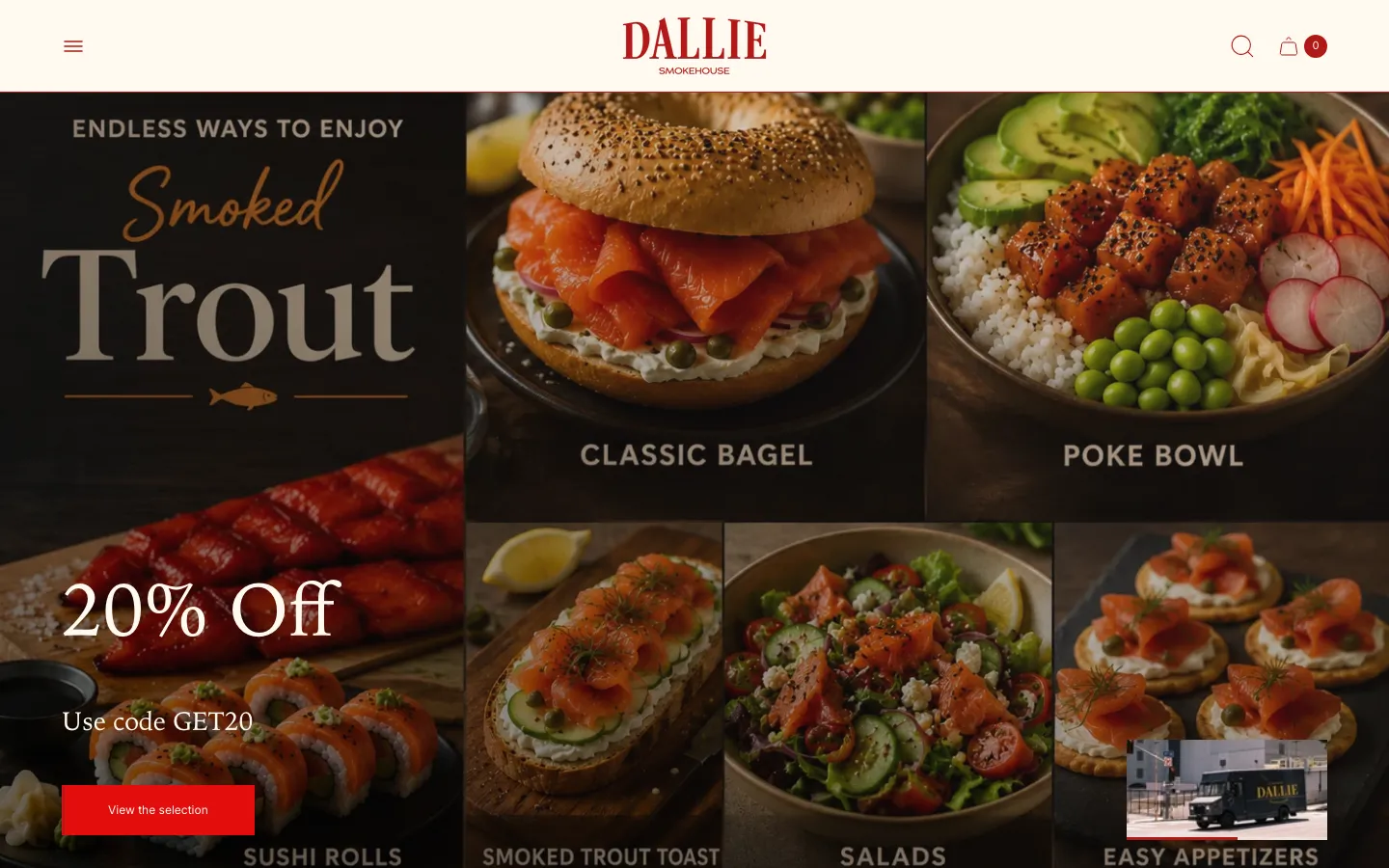
Yes. Dallie is an example of a store with a retail checkout and a separate wholesale enquiry path. Your own pricing, quantities and order rules determine the exact implementation.
Is HeadPills based in Porto?
HeadPills is based in Wrocław, Poland. We work remotely through a written brief, shared previews and agreed approvals. Any in-person meeting would be arranged in Wrocław.
How are the price and delivery date agreed?
First we agree the deliverables, functions and approval stages. The proposal states the scope, price, content dependencies and delivery date. Additional languages, licences and platform fees are identified separately.
Tell us what you want to build.
For an initial estimate, include:
- Your offer, audience and current website or identity
- Launch materials, languages and who reviews the local copy
- Required integrations or editable templates, deadline and decision-maker
An outline is enough. We do not need passwords or your customers’ personal records.