Case · Real estate

Lokalizacja: property listings connected to the CRM.

A Kraków estate agency wanted a site that runs without a webmaster: listings, photos and prices straight from the system agents already use. We built the brand, the WordPress site in two languages and the connection that keeps it current.

  • Real estate
  • Branding
  • WordPress
  • CRM integration
  • Automation
  • PL · EN
  • Kraków, Poland
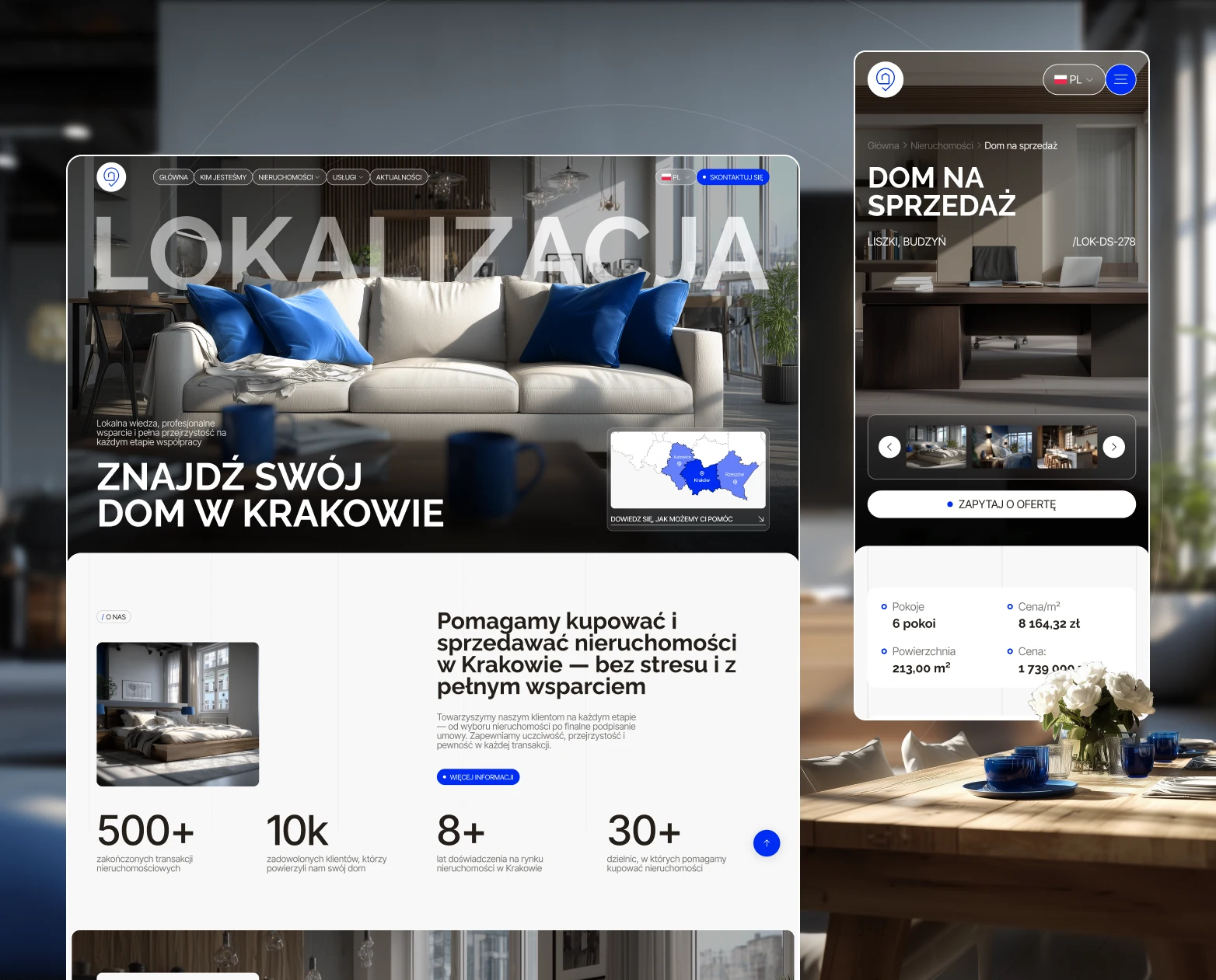
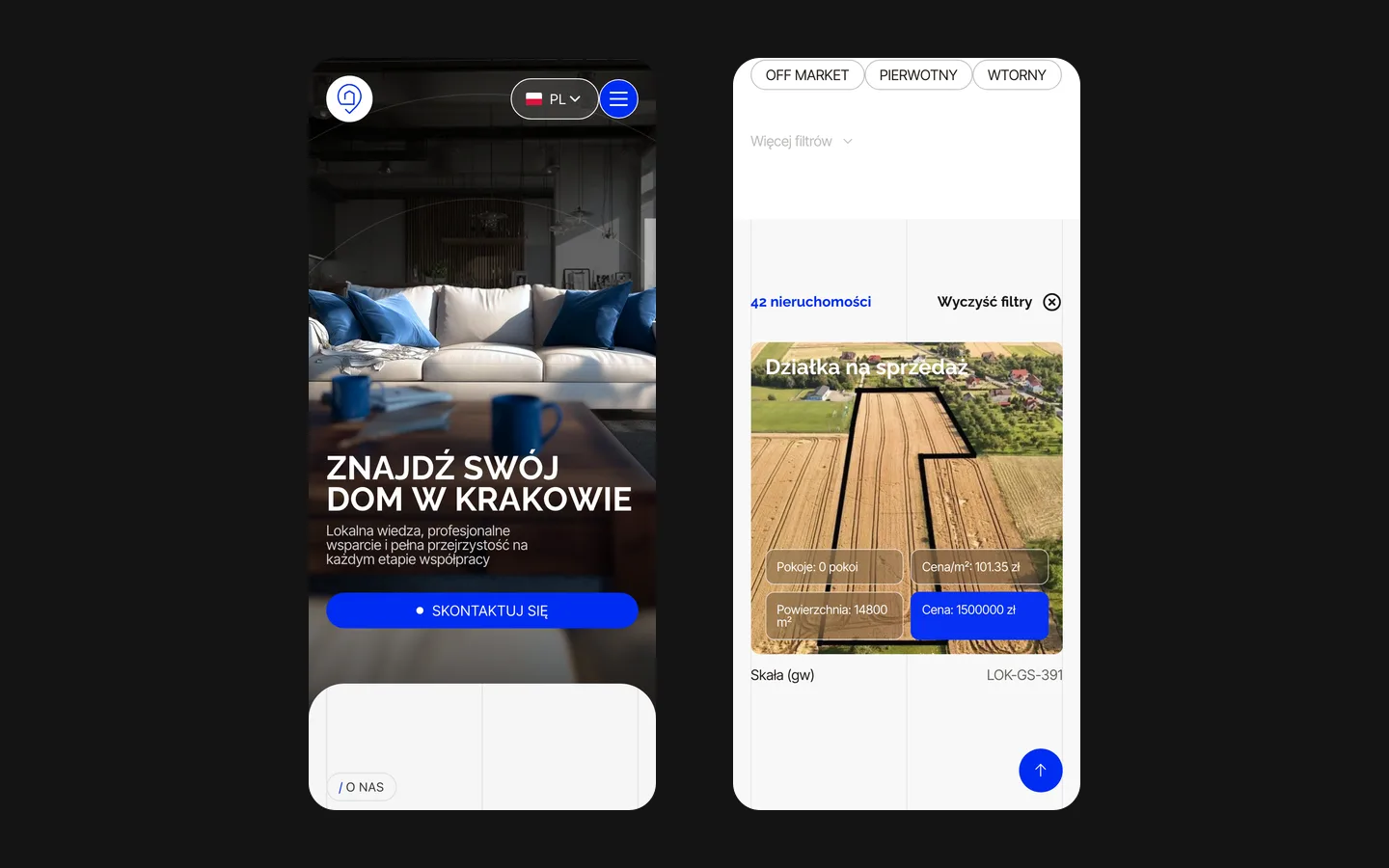
lokalizacja.netLokalizacja website preview on desktop and mobile
2 languages

Polish and English, separate pages with the right language tags. checked on the live site · Sep 2026

42 live listings

Houses, flats, plots, halls and premises, for sale and for rent, all fed from the CRM. lokalizacja.net catalogue · 3 Sep 2026

Brand + site + integration

Logo and identity from scratch, a custom WordPress theme, and the CRM connection, delivered as one project.

The project

Task, approach, what went live

The task

Lokalizacja sells and rents property in and around Kraków. People choose a home with their eyes first and check the facts second, so the catalogue had to serve both: large photography and location for the first look, and the parameters a buyer verifies afterwards one click away, not buried in a PDF.

The second requirement was operational. Agents already kept every object in their CRM. Copying each listing into the website by hand meant delays, mistakes and pages that quietly went stale. The site had to read the CRM and keep itself current.

The approach

We started with the brand: a mark, colours and type that work on a sign, a business card and a listing card alike, and give the site a face of its own rather than a marketplace look. Then the site, mobile layout first, because most browsing happens on a phone in the evening, and the desktop version followed it.

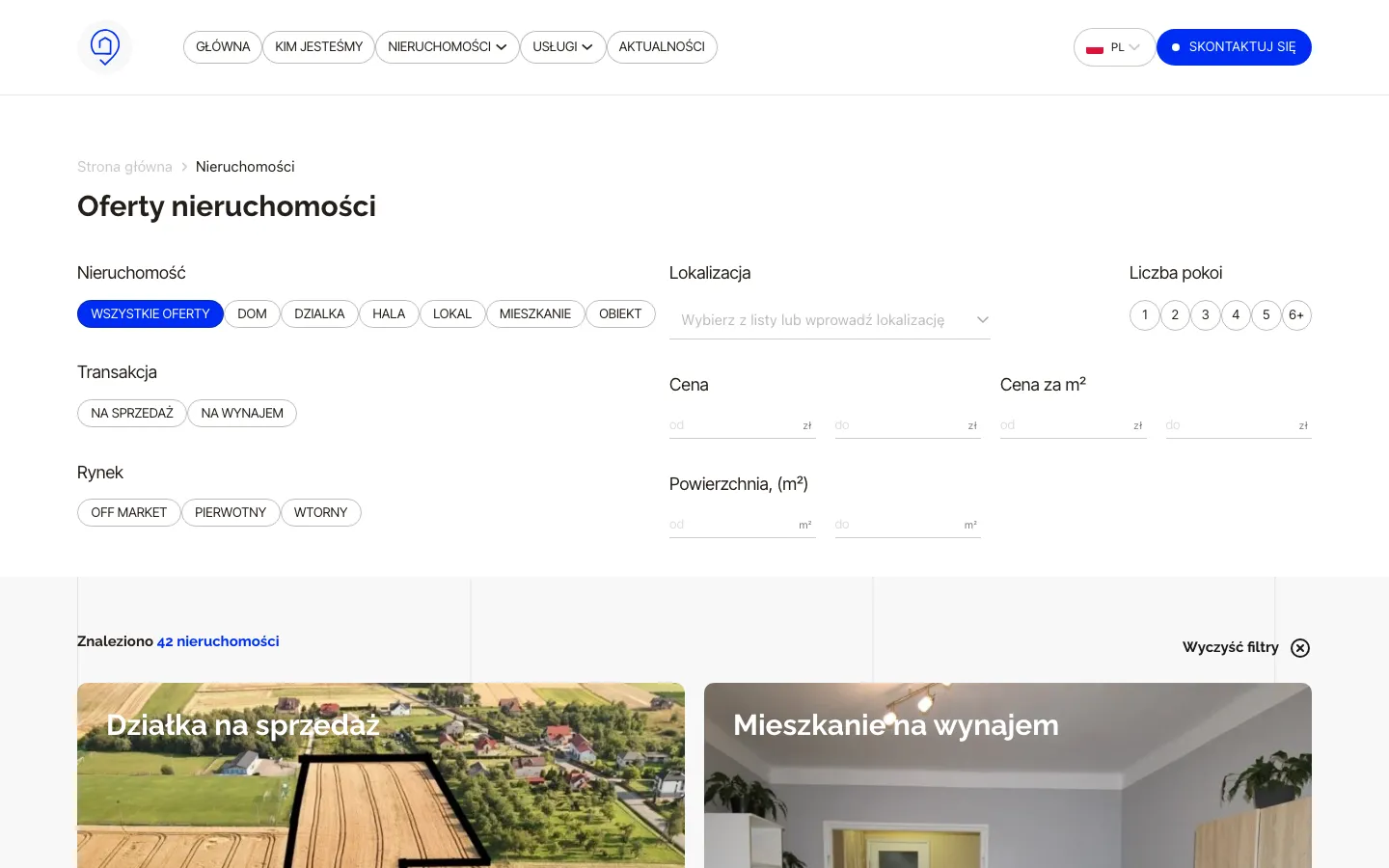
The catalogue is short on words and heavy on visuals. Filters follow how people actually search: type, sale or rent, market, location, price, price per square metre, area, rooms. Each property page is generated from the CRM record and carries an enquiry form that reaches the agent responsible for that object, not a shared inbox.

What went live

A two-language WordPress site on a custom theme, a property catalogue, and an integration that publishes and updates every listing from the agency CRM on its own. Domain, hosting, code and the connection are in the client's name.

What the site does

Seen on the live site, September 2026

  • Listings from the CRM

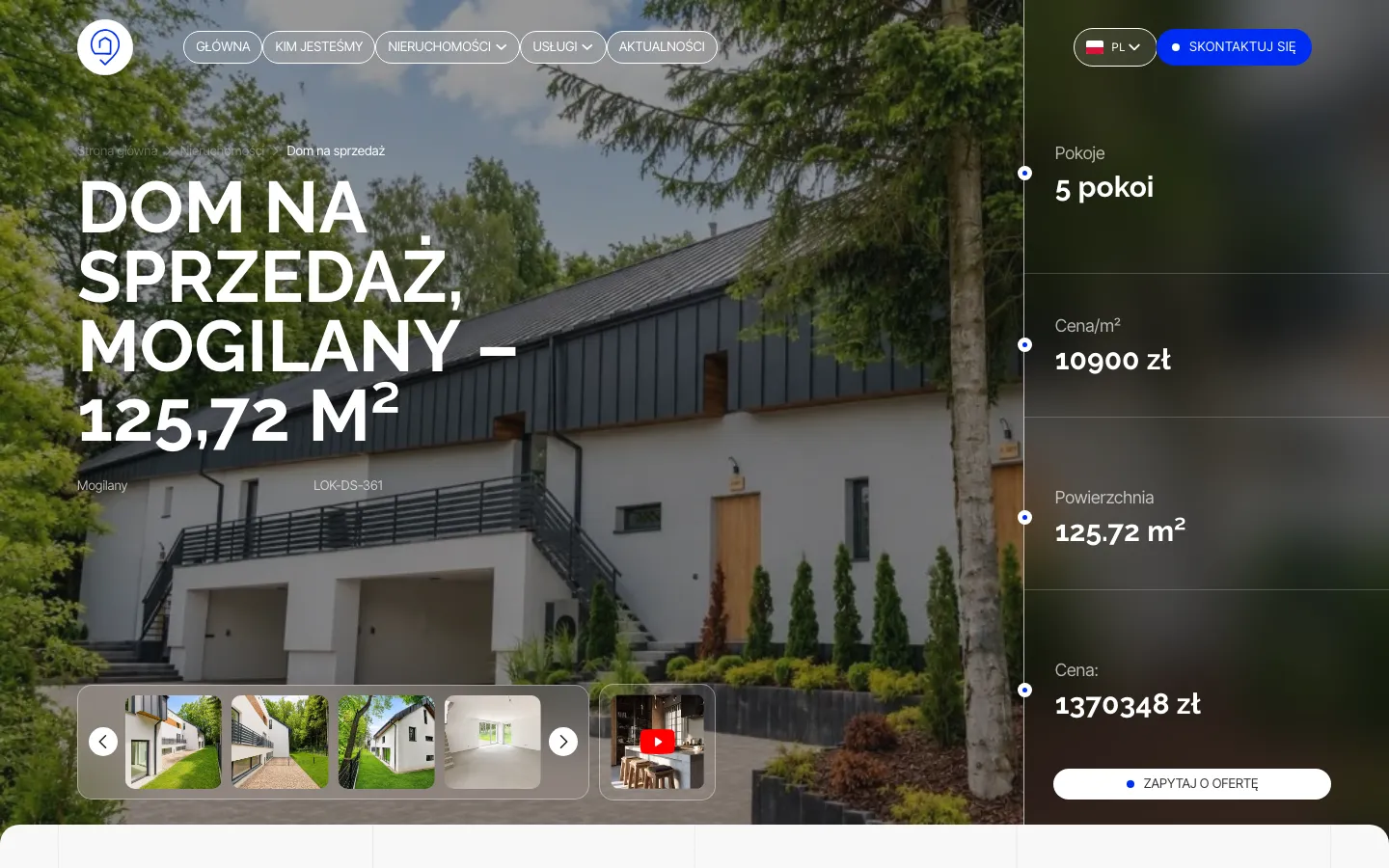
    Every object page is created and updated from the agency's system: photos, price, parameters, status.

  • Eight filters

    Type, transaction, market, location, price, price per m², area and rooms, with the live count of matching objects.

  • Enquiry to the right agent

    The form on a property page goes to the agent who handles that object, so the answer comes from someone who knows it.

  • Map of regions

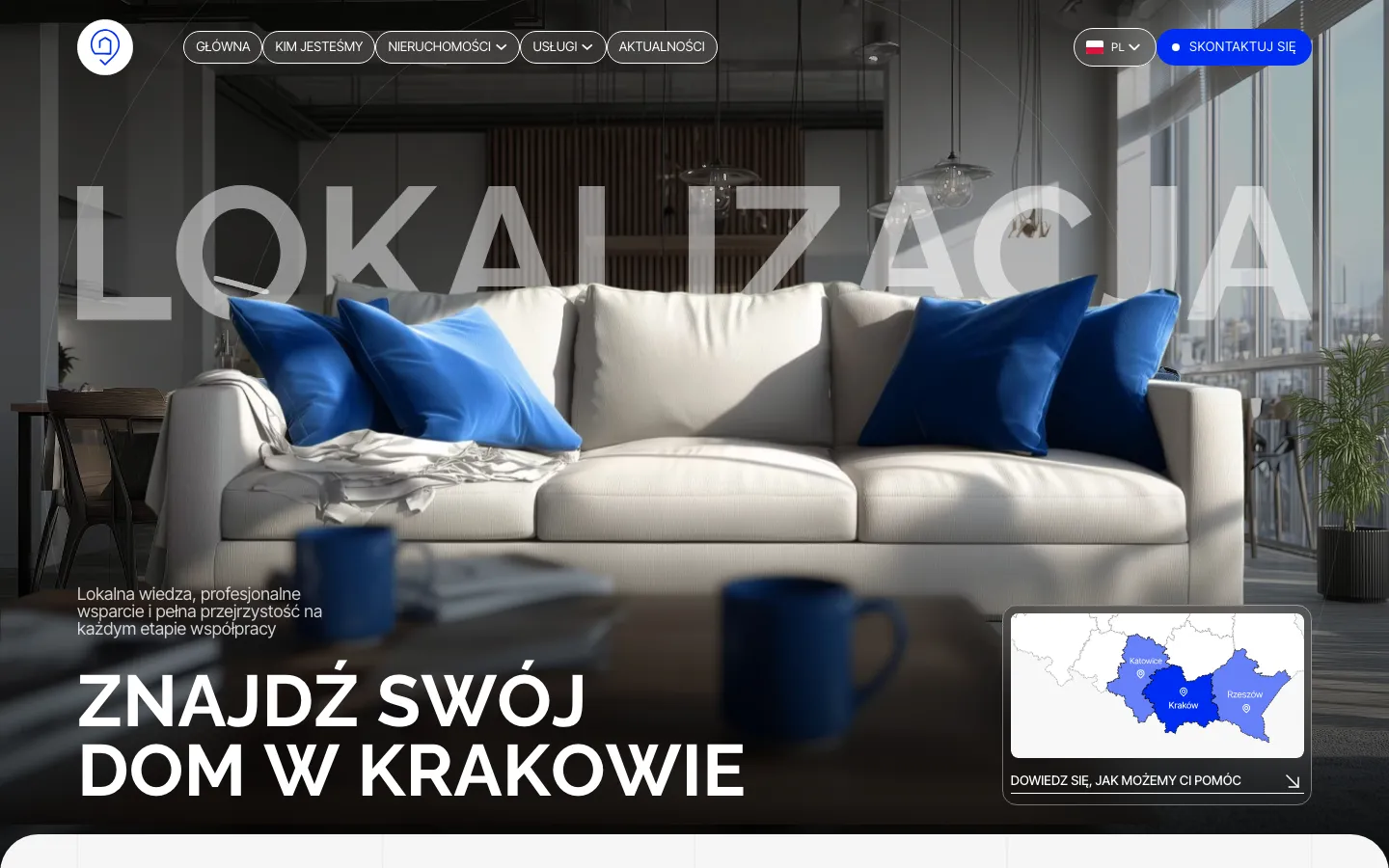
    Kraków, Katowice and Rzeszów on the first screen, so a visitor sees at once whether the agency works where they are looking.

  • Two languages

    Polish and English versions with separate pages and correct language tags, switched from the header.

  • News and services

    Sections for the agency's own articles and the services it offers, editable by the client without a developer.

“They built our real-estate agency site with property filters and CRM-fed listings. Attentive, quick with edits, and they never disappear. All very professional, thank you.”
Lokalizacja · Real-estate agency, Kraków · translated from the original

OriginalРобили нам сайт для агенції нерухомості, з фільтрами по об’єктах. Уважні, правки вносять швидко, не зникають. Все по-нормальному, дякуємо.

A property catalogue connected to the agency’s work

Lokalizacja connects a property agency’s CRM with a public catalogue and routes an enquiry to the agent responsible for the selected property. Branding and a custom WordPress site support this process in Polish and English. The visitor can move from filtered results to a detailed listing without losing the context of the search.

One property record, several public uses

The CRM connection creates and updates website listings from the agency CRM. Photographs, price, parameters and status belong to the same property record. A listing is then encountered in a filtered result and on its own page. If those views disagree, a visitor cannot tell which information to trust.

A property card connects a short summary with a detailed page and the CRM record behind it. The photograph establishes continuity; the parameters let someone evaluate the same property more closely. Lokalizacja links publication through the CRM integration. For a comparable project, the field mapping and update behaviour need to be agreed against the particular system the agency uses, rather than assumed from the appearance of its catalogue.

What the catalogue needs to keep consistent

Search parameters
The filters cover property type, transaction, market, location, price, price per square metre, area and rooms. These values need a consistent meaning across listings. A field useful inside an agency can require a clearer label when it becomes part of the public search.
The selected property
After narrowing the catalogue, a visitor needs to recognise the same property on its detailed page. Photography establishes continuity, while the parameters support a more careful assessment. The site should not make the customer reconstruct the selection from a generic contact page.
The responsible agent
An enquiry on a property page is routed to the agent handling that object. This gives the conversation a relevant owner. It does not by itself prove how quickly the agent replies or whether the visitor eventually buys or rents the property.

The visual identity keeps an agency from looking like a portal

On the homepage, a large interior image carries the opening scene, the name occupies a broad area and blue accents identify controls and the regional map. The result gives the agency a recognisable presence before the visitor reaches the filters. The operational catalogue and the brand presentation have distinct jobs, but share the same site.

That balance matters for an agency competing with larger marketplaces. A catalogue alone can communicate supply without explaining who will help with the transaction. A brand-only homepage can look polished without providing the inventory the visitor came to inspect. This case places the agency’s identity alongside a usable route into its properties.

Questions to settle before a similar integration

  1. Map the source fields

    Identify which CRM fields are public, which are internal and how photographs and listing status are represented. This is a preparation step for a comparable project, not a claim about a specific API contract in Lokalizacja. The field map should be agreed before the page templates are finalised.

  2. Define changes and removals

    Decide what the website should do when the agency edits a price, replaces images or withdraws an offer. The public behaviour must reflect the agency’s process. A connection that imports a property once is a different scope from a maintained publication workflow.

  3. Test the enquiry context

    Check that a request contains the selected property and reaches the intended person. A useful acceptance test follows one listing from its source record through the public page to the enquiry destination. It is more informative than testing only whether a generic form can send an email.

What to bring when commissioning a comparable catalogue

Bring a sample of the actual property data, the list of fields you want visitors to search, the languages you need and a description of how agents handle enquiries. Also identify who can provide access to the CRM’s integration documentation. These materials allow the data work to be estimated rather than hidden inside a general website quote.

Lokalizacja was delivered in Polish and English on WordPress, with a custom theme, identity and a CRM publication connection. The agency’s property records feed the public catalogue, and enquiries follow the selected property to its responsible agent. This ties the visual search to the agency’s work: a listing is both something a buyer compares and information the team maintains, with the same property remaining identifiable throughout the route.

The catalogue follows the agency’s source data

The WordPress catalogue publishes and updates listings from the agency CRM. Property pages combine visual presentation, searchable parameters and an enquiry directed to the responsible agent.

Useful when copying listings between systems creates extra work. Name the source system, listing fields, languages and who should receive an enquiry about each property.

Prepare a brief for a similar project

Questions

Facts about this project

What platform is the Lokalizacja site built on?

WordPress, with a custom theme and our own integration that reads listings from the agency CRM. No page builder, no marketplace theme.

How do the listings get onto the site?

From the CRM. When an agent adds or updates a property in their system, the page on the site appears or changes on its own: photos, price, parameters. Nobody copies listings by hand.

How many languages does the site have?

Two: Polish and English, each with its own pages and the correct language tags for search engines.

Who owns the site and the integration?

The client. Domain, hosting, code and the CRM connection are in their name and were handed over at launch.

Start a similar project.

Tell us what your site has to do. A short call, then a fixed price in writing.